The 5 Tourist Traps Near Chain Bridge: Savvy Tips for Budapest Visitors
The Széchenyi Chain Bridge stands as Budapest's most recognisable landmark, connecting Buda and Pest across the Danube since 1849.
Millions of visitors cross this iconic bridge each year, but many fall into expensive traps and disappointing experiences in the immediate area.
The streets surrounding Chain Bridge Budapest are filled with overpriced restaurants, pushy vendors, and tourist-focused attractions that offer poor value compared to what locals actually enjoy.
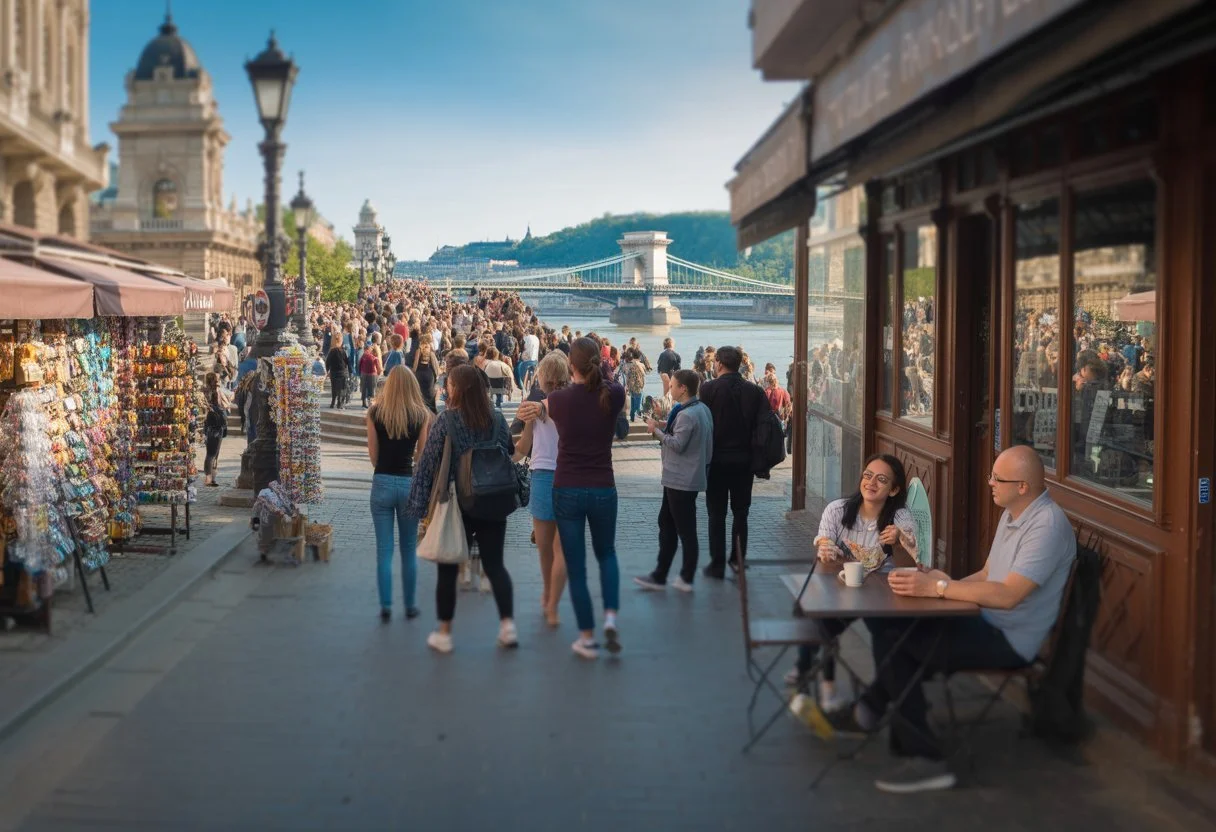
You don't need to avoid the Chain Bridge area entirely to have an authentic Budapest experience.
The key is knowing which spots drain your wallet without delivering genuine value and which places offer the real charm of this historic neighbourhood.
Most tourists walk straight into the same five traps within minutes of stepping off the bridge, simply because they don't know better.
Key Takeaways
Five common tourist traps near Chain Bridge Budapest include overpriced restaurants, pushy vendors, and disappointing paid attractions
One authentic local spot near the bridge offers genuine Hungarian culture without tourist pricing
Knowing what to avoid and where locals actually go saves money and creates better travel memories
Understanding the Chain Bridge and Its Iconic Setting
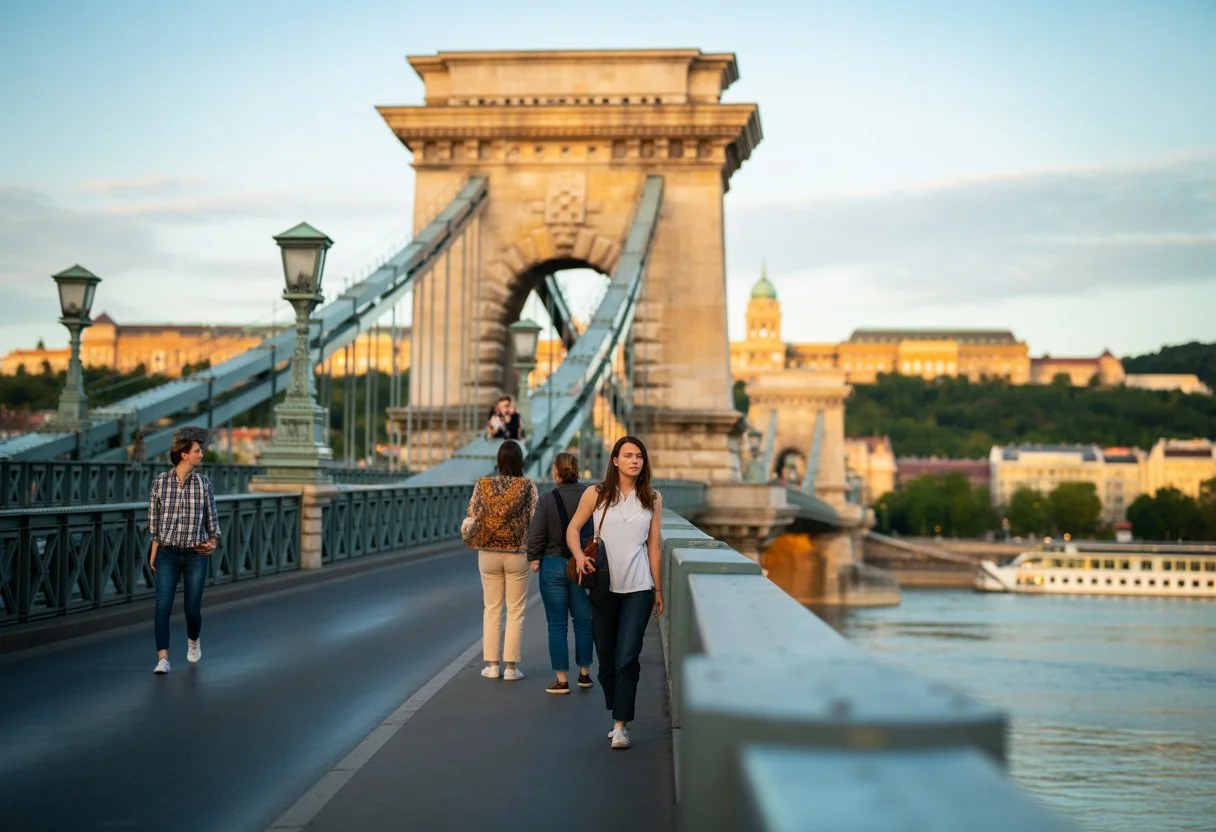
The Széchenyi Chain Bridge stands as Budapest's most recognisable landmark, spanning 375 metres across the Danube River.
Built in 1849, it marked a turning point for the city by creating the first permanent connection between Buda's hills and Pest's flat plains.
History and Significance of Széchenyi Lánchíd
The Chain Bridge Budapest emerged from the vision of Count István Széchenyi, who championed the need for a permanent crossing.
English engineer William Tierney Clark designed the structure in 1839, whilst Scottish engineer Adam Clark supervised its construction on site.
Construction began in 1840 and took nine years to complete.
When it opened on 20 November 1849, the bridge's centre span of 202 metres ranked amongst the largest in the world.
Greek merchant Georgios Sinas provided considerable funding for the project, and his name remains inscribed on the south-western foundation.
The bridge survived until 1945, when retreating German forces destroyed it during the Siege of Budapest.
Only the stone towers remained standing.
Hungary rebuilt the structure and reopened it in 1949, exactly a century after its original inauguration.
The bridge underwent renovations from March 2021 to August 2023.
Connecting Buda and Pest: Uniting a City
Before the Széchenyi Lánchíd existed, Buda and Pest functioned as separate cities divided by the Danube River.
Seasonal pontoon bridges provided the only crossing, and these became unusable during winter freezes and spring floods.
The suspension bridge created the first permanent link between the two sides.
It anchored on the Pest side at Széchenyi Square, near the Hungarian Academy of Sciences.
On the Buda side, it meets Adam Clark Square, positioned near the Castle Hill Funicular's lower station.
This permanent connection transformed how residents lived and worked.
People could now move freely between Buda's administrative centre and Pest's commercial districts regardless of weather conditions.
The bridge's success led to Budapest's formal unification in 1873.
Architectural Marvels and Lion Statues
The Chain Bridge follows the design principles of Clark's earlier Marlow Bridge across the Thames.
Workers built sections in the United Kingdom and shipped them to Hungary for final assembly.
The decorative elements use cast iron, whilst the main structure combines wrought iron and stone.
Four stone lions guard the bridge's entrances.
Sculptor János Marschalkó carved these imposing figures, which were installed in 1852.
Each lion sits atop the abutments at both ends of the bridge.
A popular legend claims the lions lack tongues, though this isn't true—the tongues simply aren't visible from street level.
The lions' design influenced later works, including Trafalgar Square's bronze lions.
Today, you'll find excellent views of the Danube from the bridge's pedestrian walkways, particularly at dawn and dusk.
Most-Visited Tourist Pitfalls Near the Bridge
The area surrounding Chain Bridge attracts millions of visitors annually, which has led to a concentration of overpriced establishments and generic tourist services.
You'll find inflated prices at riverside restaurants, mass-produced souvenirs, and cookie-cutter cruise operators all competing for your attention within walking distance of the bridge.
Overpriced Restaurants and Cafés with a View
The restaurants lining the embankments near Clark Ádám tér charge premium prices simply for their proximity to the Chain Bridge and river views.
You'll pay 30-50% more for the same meal you could find a few streets inland.
These establishments often cater exclusively to tourists, offering mediocre Hungarian dishes that lack authenticity.
The cafés near Széchenyi Square follow the same pattern.
A coffee that costs 600 HUF elsewhere will set you back 1,200-1,500 HUF at these spots.
The menus typically feature multiple languages and pictures, which generally indicates a tourist-focused operation rather than a local favourite.
Many of these venues also add service charges without clearly stating them on the menu.
You should always check your bill carefully and ask about any additional fees before ordering.
The quality rarely justifies the cost, as these establishments rely on one-time visitors rather than repeat customers.
Mass Market Souvenir Stalls
The souvenir vendors clustered around the Buda side of the bridge sell identical mass-produced items you'll find at every major tourist spot in Budapest.
These stalls stock cheap magnets, shot glasses, and T-shirts manufactured outside Hungary but marketed as authentic local products.
Prices at these stalls are often negotiable, which means you're likely being overcharged initially.
The vendors mark up items by 200-300% knowing tourists won't compare prices elsewhere.
A magnet might cost 2,000 HUF here when the same item sells for 500 HUF at shops further from major attractions.
The location near the Castle Hill Funicular and the Hungarian Academy of Sciences makes these stalls convenient but not worthwhile.
You won't find genuine Hungarian crafts or unique items here—just generic tourist merchandise.
Generic River Cruise Kiosks
The river cruise kiosks positioned strategically near the bridge approach and Clark Ádám tér sell standardised tours at inflated prices.
These operators charge 15-20 euros for basic cruises that other companies offer for half the price if you book directly or walk a few hundred metres away.
The salespeople at these kiosks use aggressive tactics to secure bookings.
They'll claim their departure is the last one available or offer "special discounts" that are actually standard prices.
The cruises themselves typically cram as many passengers as possible onto boats, reducing the experience to a floating bus tour.
You'll get better value and more personalised service by booking cruises further from the main tourist corridor.
The kiosks near St. Stephen's Basilica and other landmarks charge similar rates, so location near the bridge doesn't provide any unique advantage.
Popular Attractions That Can Disappoint Unwary Travellers
The tourist sites around Chain Bridge attract millions each year, but some leave visitors feeling shortchanged.
Two specific problems affect your experience: high ticket prices for limited access and overwhelming crowds that make photography nearly impossible.
Ticketed Views with Underwhelming Value
Buda Castle's tiered pricing system catches many visitors off guard.
The Hungarian National Gallery charges separate admission from other castle sections, and you'll pay £12-15 per person just to enter.
The viewing terraces offer pleasant perspectives of the Danube, but nothing you can't see for free from nearby vantage points along the castle walls.
Matthias Church follows a similar pattern.
Whilst the interior holds genuine historical value, the £8 entrance fee grants you perhaps 20 minutes of viewing time before you've seen everything.
The church frequently fills with tour groups between 10am and 2pm, making it difficult to appreciate the architecture or take decent photographs.
The Hungarian Parliament Building requires advance booking weeks ahead during summer.
Tours last only 45 minutes despite the £18 cost, and you'll see just four rooms inside the massive structure.
Most of your time goes to queuing and passing through security checks rather than actual sightseeing.
Crowded Photo Spots at Peak Hours
Clark Ádám Square becomes gridlocked with tour buses and selfie-takers from 9am onwards.
The zero-kilometre stone and Chain Bridge viewpoint attract such dense crowds that you'll struggle to frame a photo without dozens of strangers in it.
Early morning before 7:30am offers your only realistic chance at clear shots.
Castle Hill's famous ramparts face identical problems.
The designated photo platforms fill completely by mid-morning, with some visitors waiting 15-20 minutes just to reach the railing.
Professional photographers occupy prime spots for extended periods, and the constant flow of people makes tripod use nearly impossible.
Recognising Subtle Tourist Scams and Common Mistakes
Scammers near Chain Bridge target tourists with polite approaches and convincing stories.
They exploit your desire to be helpful and your unfamiliarity with Budapest's layout around Clark Ádám tér.
Misleading Guided Tours
Near Chain Bridge, you might spot well-dressed folks approaching tourists. They’ll say the bridge walkway or a nearby attraction’s closed for renovation.
Then, they offer to guide you to supposedly “better” viewpoints or hidden gems. What they’re really after? Commissions from overpriced souvenir shops or restaurants they steer you toward.
Some operators at Clark Ádám tér try to sell walking tours at eye-watering prices. They promise “exclusive access” or some kind of insider scoop, but most of what you’ll hear is basic info you could pull from a free guidebook.
They might even claim their tour is the “official” Chain Bridge experience. Don’t fall for it—there’s nothing official about these pitches.
Warning signs to watch for:
Unsolicited offers from people loitering near tourist sites
Claims about closures without visible signs or barriers
Pressure to book immediately or pay cash only
Prices significantly higher than posted rates online
Transportation Hustles Around Clark Ádám Tér
You’ll see unlicensed taxi drivers waiting at Clark Ádám tér. They’ll offer rides without meters, quote a decent price, then charge ten times more when you arrive.
Licensed Budapest taxis show company names, phone numbers, and those classic illuminated roof signs. It’s not hard to spot the difference if you’re paying attention.
The funicular station draws hustlers selling “fast-track” tickets at a markup. Truth is, the real queue rarely takes more than 15 minutes, and tickets cost a set amount at the official booth.
Some folks will offer to exchange currency at “special tourist rates.” But honestly, you’ll lose 20-30% compared to what you’d get at a legitimate exchange office.
The Authentic Local Spot to Experience Near the Bridge
The Danube Promenade really gives you a taste of Budapest without the tourist stampede. You’ll find peaceful spots, sweeping UNESCO World Heritage views, and a sense of the city’s history—especially with Count István Széchenyi’s legacy woven in.
Hidden Gems on the Danube Promenade
The promenade runs along the Pest side between Chain Bridge and Elizabeth Bridge. You can stroll this riverside path and soak up views locals have loved for generations.
It’s just a few metres from the tourist chaos, but mostly Budapest residents come here for their daily walks. The benches, spaced out along the path, are perfect for sitting and watching river traffic drift by.
You’ll see locals reading newspapers, couples deep in conversation, and elderly folks feeding the birds. The promenade links up with Vigadó Square, where street musicians play for whoever’s passing—not just for tour groups.
Early mornings and late afternoons have the most genuine vibe. Joggers finish their runs, and office workers sneak in a quick break between meetings.
The iron railings along the walkway—simple but classic—have been there for decades and perfectly frame the Danube view.
Relaxing by the World Heritage Views
From the Danube Promenade, you get a sweeping view of the Buda Castle District, which UNESCO declared a World Heritage Site in 1987. The panorama stretches from Gellért Hill to Margaret Bridge, showing Budapest the way locals actually see it—not just through a tour bus window.
Count István Széchenyi pushed for the development of this riverside space back in the 19th century. He helped turn Budapest into a proper European capital, and the promenade still reflects his vision for public spaces everyone can enjoy.
Honestly, grabbing a takeaway coffee from a nearby café and snagging a bench with a castle view? That’s a solid way to spend part of your day.
The World Heritage views shift as the light changes. At sunset, warm colours hit the castle walls, and in the evening, illuminated landmarks shimmer on the river’s surface. It’s hard not to linger.
Planning Your Visit: Getting the Most Out of Your Stroll
If you want to walk across the Chain Bridge, go early in the morning or after 8 PM, once tourist groups have cleared out. Parliament, Buda Castle, and St. Stephen’s Basilica are all within a 15-minute walk, so timing really makes a difference if you want to dodge the crowds.
Optimal Times for Walking the Bridge
The bridge is at its quietest from 6-8 AM. You’ll get the pedestrian walkways almost to yourself—no crowds, no selfie sticks, just clear views of the Hungarian Parliament Building.
If you’re into photography, blue hour (about 30 minutes after sunset) is perfect. The bridge lights up, the sky still has colour, and it all just looks incredible.
Try to avoid midday between 11 AM and 3 PM—that’s when cruise groups and tour buses flood the area. Weekday mornings are noticeably calmer, with about 40% fewer visitors than weekends.
Visiting on a Saturday or Sunday? Best to show up before 9 AM or after 7 PM. Trust me, it’s worth the early start or late stroll.
Accessing Major Landmarks Without the Crowds
Start at St. Stephen's Basilica before 9 AM. Then wander over to the bridge via Zrínyi utca—it only takes about five minutes.
Head across to the Buda side and climb the stairs up Castle Hill instead of taking the funicular. That way, you skip the line and snag some great viewpoints as you go.
If you want Parliament views, hang out on the Buda embankment near Clark Ádám tér. Most people crowd the Pest side for photos, so you'll probably get this angle to yourself.
The walk up to Buda Castle from the bridge's western end takes around 12 to 15 minutes—it's uphill, but not too bad. Try visiting Castle Hill after 5 PM; by then, day-trippers are gone but the grounds stay open.
