Irish Links To Budapest: A Fun & Fascinating Guide for Tourists
Ireland and Hungary might seem worlds apart, but Budapest has become an unexpected home away from home for Irish people.
The Irish community in Budapest, though small, has built a lively presence through cultural organisations, sporting clubs, and annual celebrations that bring a taste of Ireland to the Hungarian capital.
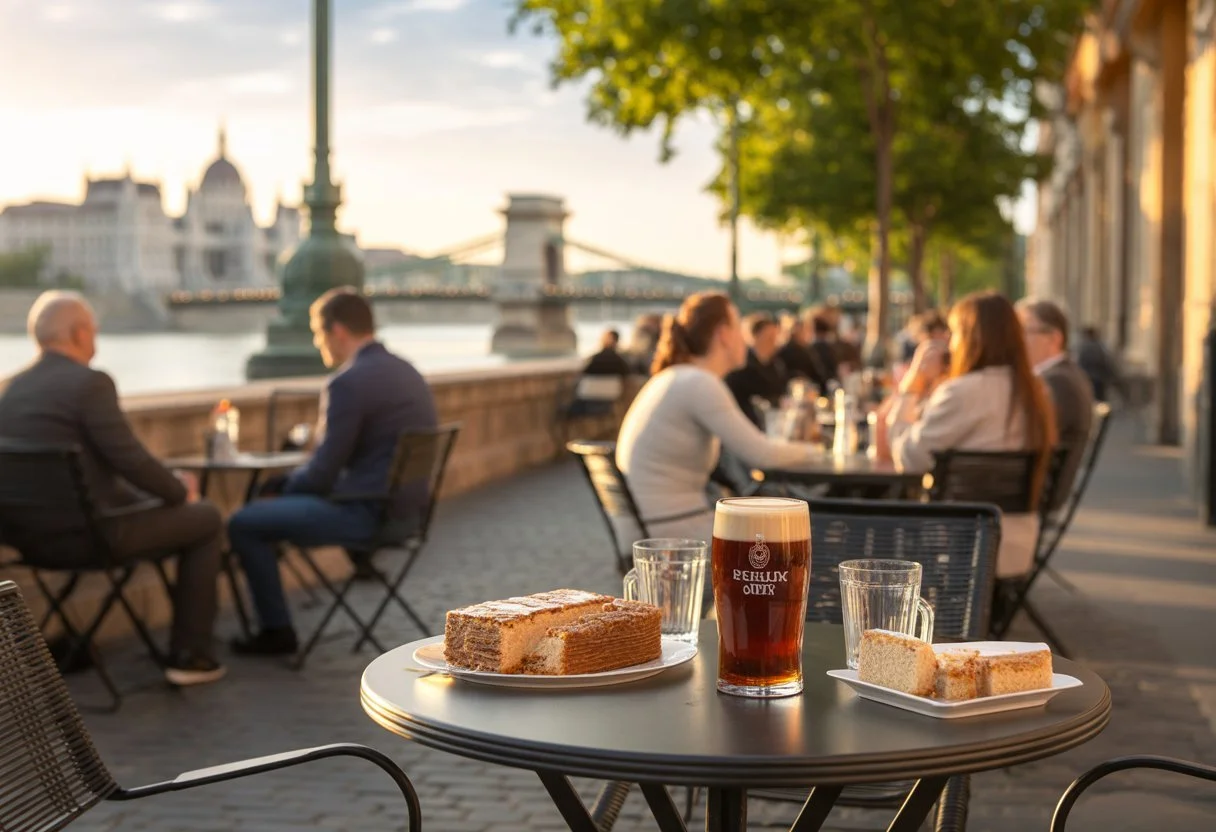
From St Patrick's Day festivals at Szabadság tér to the Budapest Gaels GAA club, Irish culture pops up in all sorts of unexpected corners of this Central European city.
Connections between Ireland and Hungary go back centuries, built on shared struggles for independence and freedom.
These old bonds have grown into modern ties that span education, business, and culture.
Over 130 Irish students study veterinary science in Budapest, and Irish companies employ thousands of Hungarians, weaving a network of professional and personal relationships.
Whether you're planning a visit, thinking about a move, or just curious about Irish expats in Budapest, you'll stumble upon a welcoming community that actively keeps its cultural identity alive.
The Irish Embassy has supported these connections since 1995, backing everything from trade to cultural exchanges that benefit both nations.
Key Takeaways
Ireland and Hungary share centuries of historical connections based on mutual struggles for independence and freedom
The Irish community in Budapest maintains its cultural identity through organisations like the Budapest Gaels, annual St Patrick's Day celebrations, and active networking groups
Strong educational and business links exist between the two countries, with over 130 Irish students studying in Budapest and Irish firms employing thousands in Hungary
The Historical Bonds Between Ireland and Hungary
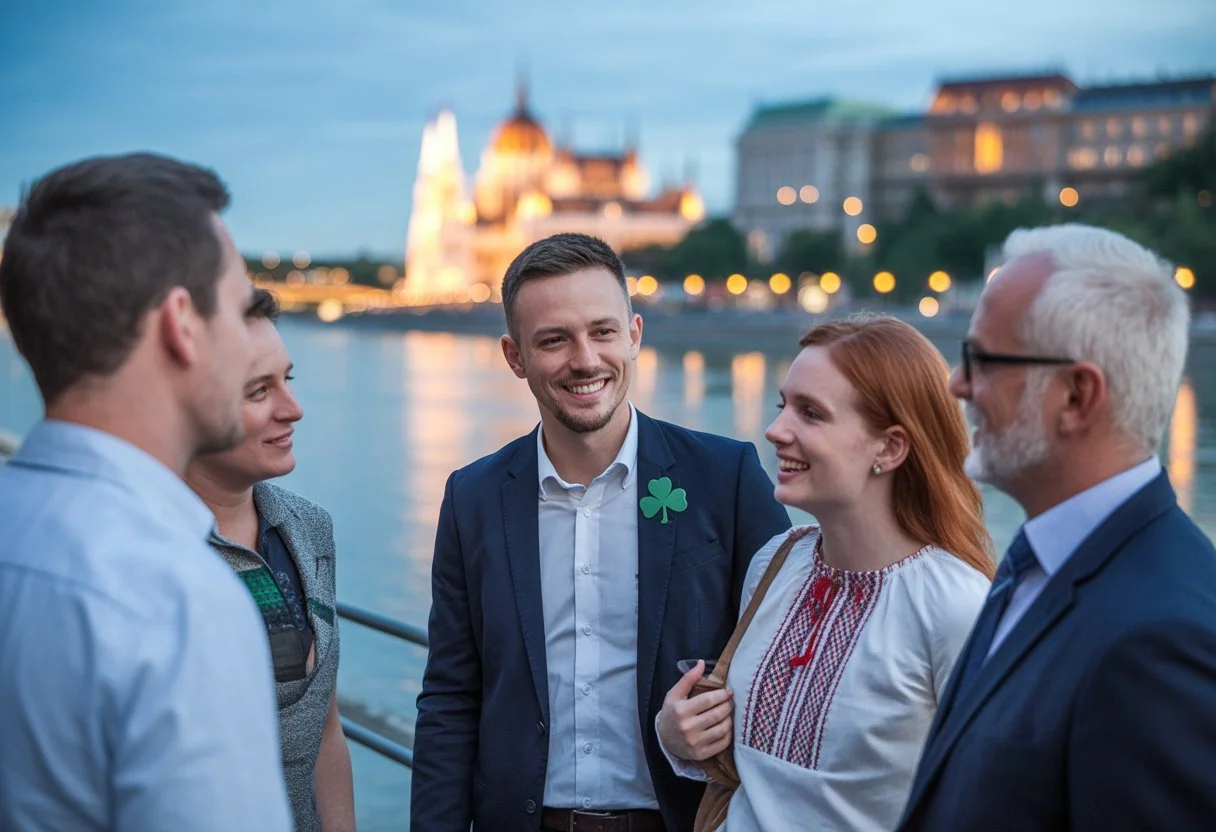
Ireland and Hungary share deep historical connections rooted in parallel struggles for freedom.
Mutual inspiration flowed between revolutionary leaders, and cultural exchanges stretched from medieval times through to modern EU membership.
Medieval Encounters and the Birth of Affinity Diaspora
The relationship between Ireland and Hungary reaches back at least to the Middle Ages.
Irish scholars and clergy traveled to Central Europe, creating some of the earliest cultural links.
Esztergom, Hungary's religious center, was among the places where these medieval connections took root.
These early encounters set the stage for what people now call an "affinity diaspora" between the countries.
Rather than large-scale migration, the two nations built bonds through shared experiences and a kind of mutual understanding.
Both Ireland and Hungary endured centuries of foreign rule and fought to keep their cultural identities alive against powerful empires.
Revolutionary Inspirations: Kossuth, Deák, O'Connell and Griffith
The early 19th century brought a wave of political inspiration between the countries.
Lajos Kossuth, a leading Hungarian revolutionary, wrote admiringly of Daniel O'Connell, Ireland's Liberator, who campaigned for Catholic emancipation and Irish rights through peaceful means.
Decades later, inspiration moved in the other direction.
Arthur Griffith, a key figure in Irish nationalism, studied the work of Kossuth and Ferenc Deák, taking lessons from their political strategies.
The 1848 revolutionaries in Hungary especially captured Irish imagination.
WB Yeats praised their bravery, calling Ireland the "Hungary of the West" and offering poetic tributes.
Irish nationalists didn't just admire from afar—they studied Hungarian resistance methods and adapted them for their own struggles.
Ireland and Hungary in the 20th Century: Shared Struggles and Refuge
The 20th century added new layers to Irish-Hungarian relations through direct humanitarian action.
In 1956, after Soviet tanks crushed the Hungarian uprising, Ireland sheltered 541 Hungarian refugees.
This marked Ireland's first major UN refugee program as a young independent state.
Formal diplomatic relations began in 1976, with Hungary opening an embassy in Dublin in 1991 and Ireland following with its own embassy in Budapest in 1995.
These moves showed both nations' renewed independence and their desire to build closer ties beyond Cold War divisions.
Turning Points: EU Accession and Modern Relations
On 1 May 2004, Hungary joined the European Union during Ireland's EU Presidency.
The Irish government marked the occasion with the "Day of the Welcomes" in Dublin, celebrating the accession of ten new member states.
EU membership shifted the relationship into a partnership within shared European institutions.
Today, about 10,000 Hungarians live in Ireland, contributing to Irish society in all sorts of ways.
Around 1,000 Irish citizens live in Hungary, with roughly half based in Budapest, where they keep up connections through cultural events and business networks.
The Irish Community Thriving in Budapest
The Irish presence in Budapest revolves around active organisations like the Irish-Hungarian Business Circle and the Budapest Gaels GAA club.
Irish students and expats add to a lively cultural scene across the city.
Demographics and Cultural Anchors
The Irish community in Budapest gathers around several key organisations.
The Irish-Hungarian Business Circle (IHBC) has been the main hub since 2005, connecting Irish and Hungarian business professionals while organising social and cultural events.
The Budapest Gaels GAA club keeps Gaelic football alive in the Hungarian capital, providing a sporting outlet for Irish expats and introducing locals to traditional Irish games.
St Patrick's Day stands out as the community's biggest annual gathering.
The IHBC and the Embassy of Ireland team up to turn Szabadság tér into a huge celebration, with one of Central Europe's biggest St Patrick's Day festivals.
The 2025 event drew hundreds of participants and became a must for the Irish diaspora and Hungarian families alike.
The Embassy of Ireland also celebrates Imbolc every year, highlighting remarkable women from both countries.
Regular pop-up Gaeltachts, organised by the IHBC, help keep the Irish language alive among community members.
Student Life and Academic Links
Irish students and academics connect through various cultural and educational programs in Budapest.
Universities host Irish studies centres that encourage research and a deeper understanding of Irish culture and history.
The Embassy of Ireland partners with educational institutions to share info about Irish cultural events during the academic year.
These collaborations open doors for both Irish and Hungarian students to experience Irish traditions and modern culture.
Stories of Irish Expats in Budapest
Irish expats often describe the Budapest community as active and welcoming, both online and in person.
InterNations Ambassadors put together regular gatherings, from dining experiences at trendy restaurants to weekend trips out in the Hungarian countryside.
Ambassador Ronan has pointed out how the community strengthens people-to-people links through all sorts of activities each year.
The first St Patrick's Day parade since 2019 happened in March 2022, marking the community's return to big public celebrations after COVID-19 restrictions.
Many Irish expats rely on IHBC membership for support, connecting newcomers with established community members.
The organisation helps Irish businesses set up in Hungary and also supports Hungarians interested in starting operations in Ireland.
Key Irish Organisations and Networks
Several established organisations connect Irish expats and Hungarian locals who are curious about Irish culture and business in Budapest.
These groups range from professional networking circles to sports clubs, offering support for both newcomers and long-term residents all year round.
The Irish-Hungarian Business Circle (IHBC)
The Irish-Hungarian Business Circle is a not-for-profit, member-based organisation founded in 2005.
It operates independently from politics and aims to build business and social connections between Ireland and Hungary.
The IHBC is the main contact point if you're running an Irish business and want to set up in Hungary.
It also helps Hungarian companies looking to get started in Ireland.
Members include major companies like Kingspan, McHale Engineering, and PricewaterhouseCoopers.
The circle revolves around four main pillars: business, social, cultural, and charity work.
Each year, it hosts networking events, professional gatherings, and fundraising activities.
The IHBC works closely with the Embassy of Ireland and proudly sponsors the Budapest St Patrick's Day Festival.
Their annual St Patrick's Day Charity Gala brings together Irish and Hungarian business communities for an evening of networking and celebration.
Enterprise Ireland and Trade Relations
Enterprise Ireland keeps an office in Budapest at Bank Center on Szabadság tér 7.
The organisation works alongside the Embassy of Ireland to support Irish companies operating in Hungary or exporting to the Hungarian market.
You can tap into trade support services through Enterprise Ireland if you manage an Irish business with Hungarian interests.
The agency collaborates with Bord Bia and the IHBC to offer comprehensive help to Irish enterprises.
This three-way partnership creates a strong support network for trade between the two countries.
Budapest Gaels GAA Club
The Budapest Gaels bring Gaelic games to the Hungarian capital.
This GAA club keeps Irish sporting traditions alive in Central Europe, letting you play Gaelic football and hurling far from home.
The club welcomes both Irish expats and locals who want to try traditional Irish sports.
They organise regular training sessions, matches, and social events throughout the year.
Other Social and Cultural Groups
Outside business and sports, you'll find various Irish social groups in Budapest.
These organisations organise cultural events, language exchanges, and casual gatherings for the Irish community.
The Embassy of Ireland provides consular and passport services for Irish citizens living in or visiting Hungary.
Plenty of smaller groups and informal networks are scattered across the city, often planning their activities around big Irish holidays and cultural celebrations.
The Embassy of Ireland in Budapest and Diplomatic Ties
The Embassy of Ireland in Budapest stands as the main diplomatic mission for Irish interests in Hungary.
It provides essential consular services and works to strengthen ties between the two nations.
The embassy operates from its central spot at Szabadság tér 7 in Budapest's District V, making it easy to find if you need help or want to connect.
They facilitate cooperation across political, economic, and cultural spheres, quietly helping keep the Irish-Hungarian bond alive in everyday ways.
The Role of the Embassy and Consular Services
The Embassy of Ireland offers a wide range of consular services for Irish citizens living in or visiting Hungary. You can get help with passport applications, renewals, and emergency travel documents at the embassy's offices.
The team supports the growing Irish business presence in Hungary. Over 100 Irish companies now trade with Hungary, working through local distributors or direct sales.
Enterprise Ireland works closely with the embassy to strengthen these commercial ties and open new doors for Irish businesses. They’re always on the lookout for fresh opportunities.
The embassy sits in the Bank Centre's Granite Tower on the seventh floor, close to St. Stephen's Basilica. It’s easy to reach by metro—just hop on the Blue Line (metro number 3) and get off at Arany János station.
Ambassador Ronan Gargan: Leadership and Community Connections
Ambassador Ronan Gargan leads the Embassy of Ireland in Budapest. He’s Ireland's official representative to Hungary, handling diplomatic relations, supporting Irish citizens, and promoting Irish interests across different sectors.
He keeps in touch with the Irish community in Budapest and regularly meets Hungarian officials to strengthen ties between the two countries. This means encouraging political dialogue, supporting Irish cultural events, and speaking up for Irish businesses in Hungary.
Official Events and Bilateral Cooperation
The embassy organises and joins official events that celebrate Irish culture and deepen diplomatic bonds. These gatherings bring together the Irish community, Hungarian partners, and international representatives based in Budapest.
Bilateral cooperation covers trade, education, and cultural exchange. The embassy teams up with groups like the Irish-Hungarian Business Circle to promote economic links.
You’ll spot the embassy supporting projects that connect Irish and Hungarian institutions, whether it’s business forums, educational partnerships, or cultural programmes that show off Irish heritage in Hungary.
Iconic Irish-Inspired Events, Pubs and Traditions
Budapest's Irish scene brings genuine culture to Central Europe with festivals, music venues, and celebrations throughout the year. The Irish community in Budapest keeps these traditions alive, joined by local organisations and Hungarians who’ve fallen in love with Irish culture.
St Patrick's Day in Budapest
Szabadság tér hosts one of Central Europe's biggest St Patrick's Day celebrations every March. The festival runs from noon to 6 PM on the Sunday closest to 17 March, with the parade starting at 2 PM through District V.
The Irish-Hungarian Business Circle and the Embassy of Ireland organise the event together. Expect live traditional Irish music, dance performances, and Gaelic sports by the Budapest Gaels.
Food stalls serve classic Irish dishes, and kids can enjoy face painting and even meet Irish Wolfhounds. The parade winds past landmarks like the Parliament building and St Stephen's Basilica before looping back to the festival grounds.
Thousands show up every year, making it a highlight for both the Irish community in Hungary and locals who love Irish culture. The festival also raises money for Hungarian charities through different activities.
Irish Pubs and Music Culture
Irish pubs scattered across Budapest act as year-round gathering spots for the Irish community in Budapest and anyone who enjoys traditional culture. These venues host regular trad sessions—think fiddles, tin whistles, and bodhrán drums.
Pubs here offer more than just drinks. You’ll find real Irish hospitality, storytelling, and live music that keeps old traditions going, even far from Ireland.
Musicians gather to share their talents, creating the same atmosphere you’d find in Dublin or Cork. These spots get especially lively during St Patrick’s Day, but they’re important cultural hubs all year.
The IHBC often uses these venues for social gatherings, building stronger ties between Irish expats and Hungarians curious about Irish culture.
Traditions and Festivals Throughout the Year
Budapest’s Irish scene stays active beyond March with regular cultural events. The Embassy of Ireland puts on monthly activities like lectures, film screenings, and exhibitions that highlight Irish arts and literature.
Every June, the Irish community celebrates Bloomsday to honour James Joyce’s Ulysses, set on 16 June 1904. The Budapest Gaels GAA club keeps Gaelic football and hurling alive year-round, welcoming both seasoned players and total beginners.
The Irish-Hungarian Business Circle hosts an annual St Patrick’s Day Charity Gala at the Budapest Marriott Hotel. The event features Irish performances, auctions, and raffles to support local charities for victims of domestic abuse and vulnerable youth. The IHBC even runs pop-up Gaeltachts to celebrate the Irish language.
Travel, Study and Explore: Making the Irish Connection
Getting to Budapest from Ireland is easier than ever, thanks to direct flights between the capitals. Once you arrive, you’ll discover a city full of history, gorgeous architecture, and plenty of day trips into Hungary’s beautiful countryside.
Dublin to Budapest: Flights and Getting Around
Aer Lingus flies direct from Dublin to Budapest, making the trip quick and painless. The flight takes about three hours, so you’ll be in Hungary before you know it.
Budapest’s public transport is excellent. The metro, trams, and buses cover the whole city, and you can grab a 72-hour travel pass for unlimited rides.
If you prefer private transport, taxis and ride-sharing apps work well. The city centre is pretty walkable, especially along the Danube riverfront.
Most Irish visitors find it easy to get around—English is widely spoken in tourist areas and at transport hubs.
Exploring Budapest: Buda Castle and Beyond
Buda Castle rises above the city on Castle Hill, offering sweeping views across the Danube. Inside, you’ll find museums, galleries, and the Hungarian National Gallery.
You can reach the castle by funicular railway or by walking up the hill, if you’re feeling energetic. The castle district also includes Matthias Church and Fisherman’s Bastion, both worth a visit.
The bastion’s neo-Gothic terraces give you some of the best photo ops in the city. Down at street level, the Hungarian Parliament Building dominates the Pest side of the river.
You can book a tour of this impressive Gothic Revival building in advance. If you’re after some relaxation, the Széchenyi Thermal Baths offer a classic Budapest experience in one of Europe’s biggest thermal bath complexes.
Great Escapes: Lake Balaton, Eger and Esztergom
Lake Balaton sits about 90 minutes from Budapest by train or car. It’s Central Europe’s largest lake, with beaches, swimming, and lively waterside towns to explore.
The north shore has hillside vineyards and hiking trails, while the south side is flatter—perfect for cycling. Eger, up in northern Hungary, is famous for its thermal baths and historic castle.
The town is known for Egri Bikavér, or Bull’s Blood wine, which you can try in the Valley of the Beautiful Women wine cellars. Baroque buildings and a Turkish minaret give this small town a unique feel.
Esztergom sits on the Danube bend and boasts Hungary’s largest basilica. Climb to the dome for sweeping river views. The town is right on the Slovak border, so you can easily visit two countries in a single day trip.
Tourism Ireland's Tips for Visitors
Book your flights from Dublin early if you want to snag better prices. This is especially true during the busy summer months or around Christmas markets—those dates just fill up fast.
If you can, try visiting in spring or autumn. The weather feels pretty nice then, and you won't have to deal with the summer crowds.
Grab a Budapest Card for free public transport. You'll also get discounts at museums, restaurants, and even the famous thermal baths.
The card comes in 24, 48, or 72-hour versions, so just pick what fits your trip.
Hungarian forints are still the local currency, even though lots of touristy places will take euros. ATMs are easy to find, but it's smart to let your Irish bank know you're traveling—no one wants a surprise card block.
Pick up a few basic Hungarian phrases if you can. Sure, English works in most tourist spots, but locals really notice when you try. "Köszönöm" (thank you) and "Szia" (hello/goodbye) are always appreciated.
