Irish Bar vs. Hungarian Pub: Key Cultural Differences
Walk into a bar in Dublin calling itself a pub, and you know roughly what to expect: a pint of stout, a bit of conversation, maybe a fiddle in the corner. Walk into a venue in Budapest with "pub" on the sign, and the picture gets less predictable. It might be a cosy kocsma with local beer and pálinka, a sprawling romkocsma with three dance floors, or a cocktail bar that borrowed the word for familiarity.
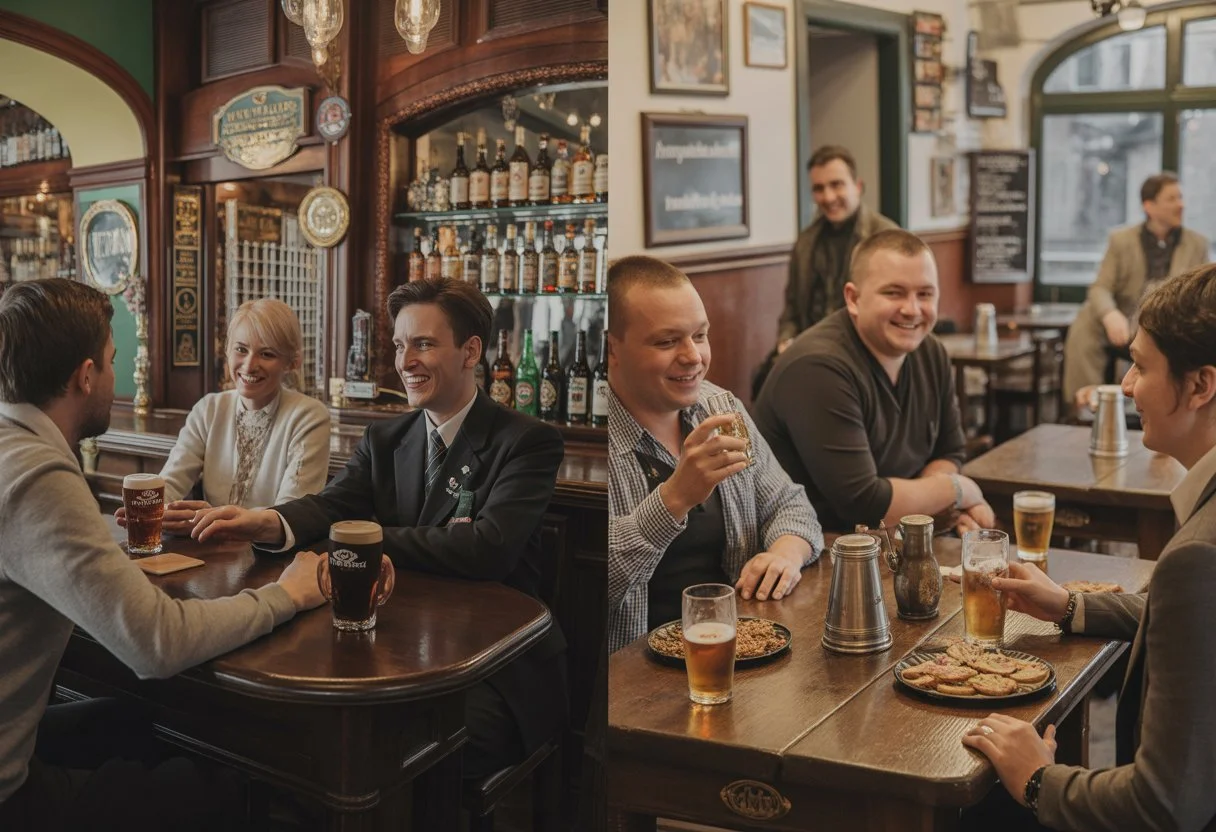
The word "pub" carries a specific cultural weight in Ireland that it simply doesn't carry in Hungary, where the same word gets applied to venues ranging from quiet neighbourhood bars to full nightclubs. Knowing this before you go out for the evening saves you from misjudging the dress code, the noise level or the kind of night you're actually signing up for.
This matters whether you're an expat working out where to have a quiet pint after work, a student in Budapest trying to decode a bar's vibe from its name, or a visitor to Ireland wondering if the trad music session is really happening or just for tourists. Ireland and Hungary both have rich, distinct drinking cultures. Neither should be flattened into the other.
Key Takeaways
The Irish pub functions as a genuine community space with its own etiquette, while a Hungarian "pub" can mean anything from a quiet kocsma to a loud ruin bar or nightclub.
Drink choices differ sharply: expect stout, ale and Irish whiskey in Ireland, and a wider spread of local lager, wine and spirits in Hungary.
Matching your expectations (conversation and trad music versus DJs and dance floors) to the right venue makes for a far better night out in either country.
Why "Pub" Means Different Things in Ireland and Hungary
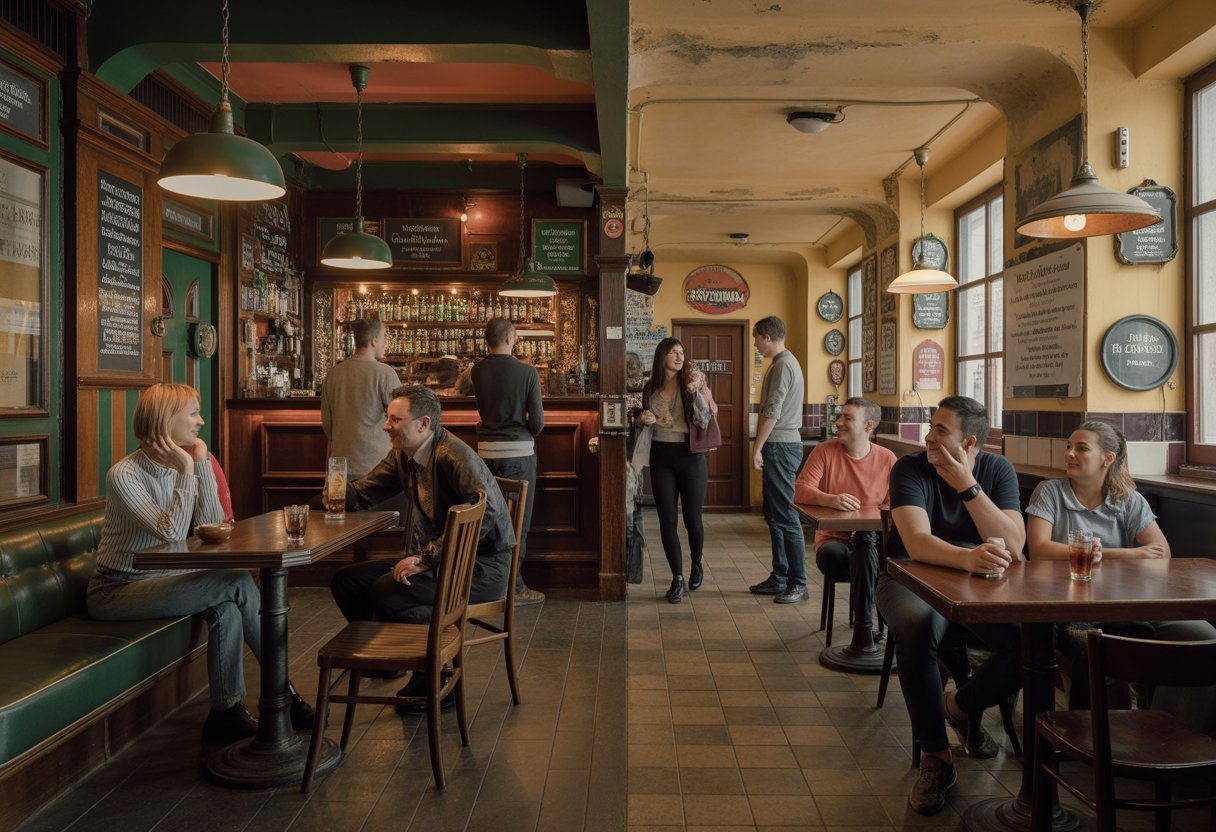
An Irish pub is a public house with a specific social role rooted in centuries of local licensing history, while a Hungarian venue using the word "pub" borrows an English term that doesn't map onto one fixed local tradition. The difference starts with etymology and ends up shaping everything from opening hours to how strangers talk to each other.
The Irish Public House as a Community Hub
The term "pub" is short for public house, a designation with roots stretching back roughly a thousand years on Irish soil. Seán's Bar in Athlone, County Westmeath, claims the title of oldest pub in Ireland, tracing its history to the 10th century, and Dublin's Brazen Head has been serving drinks since 1198.
For most of that history, the Irish pub operated as more than a place to drink. It doubled as a grocer's shop in many towns, a tradition known as the "spirit grocery," and functioned as the social equivalent of the local church: a fixture that locals return to again and again as "the local."
That community role persists today. Regulars know the publican, staff know regulars by name, and rounds of drinks get bought in turn as an unspoken rule of fairness. This pattern of Irish pub culture is distinct from typical British pubs, which more often tie to a single brewery, and from American-style bars, which rarely carry the same neighbourhood weight.
What Hungarian Venues May Be Called a Pub
Hungary's drinking establishments carry their own vocabulary, and "pub" gets applied loosely across several of them. A kocsma is the closest Hungarian equivalent to a neighbourhood pub: modest, informal, and often serving a narrow but solid range of beers and spirits to a local crowd.
A romkocsma, or ruin bar, is something else entirely: a bar built into a derelict building or courtyard, often multi-room, sometimes with a dance floor, and firmly associated with Budapest's nightlife scene rather than a quiet local gathering. Some venues marketed to visitors as "Irish pubs" in Budapest lean into Irish pub culture deliberately, offering Guinness, Irish whiskey and live sport, which makes them a distinct category from both the kocsma and the romkocsma. If you're planning a night around Irish-themed venues specifically, it helps to know why Irish bars are so popular with visitors to Budapest before choosing where to go.
What Will You Drink?
Drinks are where the Irish pub and the Hungarian pub diverge most clearly. Ireland centres its pub culture on stout, ale and native whiskey, while Hungary offers a broader, less standardised spread across beer, wine, spirits and cocktails.
Pints, Stouts and Irish Whiskey
Guinness is the drink most associated with Irish pubs, and ordering "a pint" without specifying usually means stout unless you say otherwise. Ales and lagers sit alongside it on tap, and cider (Bulmers being a familiar name) is a standard alternative for those who prefer something lighter.
Irish whiskey holds its own place at the bar. Jameson is the most recognisable name, though pubs typically stock a handful of Irish whiskey brands for neat drinks, whiskey and mixers, or the traditional hot whiskey on a cold evening. If you're curious how Irish whiskey compares against Scotch, it's a debate that comes up often at the bar. The history behind Guinness as Ireland's most exported stout also explains why it dominates the tap in pubs well beyond Ireland's borders. For a broader rundown, ten classic Irish drinks worth knowing covers the range from stout to cocktails.
Beer, Wine, Spirits and Cocktails in Hungary
Hungarian pubs and bars serve a wider mix by default. Local lager dominates in a kocsma, wine gets serious attention given Hungary's own wine regions, and spirits like pálinka (a strong fruit brandy) appear on most menus as a shot rather than a mixer.
Cocktail bars and wine bars operate as separate categories from the traditional pub in Hungary's cities, particularly in Budapest, where the drinking scene stretches from dive-bar simplicity to polished cocktail lists. Mocktails have become more common on Budapest menus in recent years, reflecting a broader shift toward non-alcoholic options across the city's bars. If you're ordering in Hungarian for the first time, a quick guide on how to order a beer in Hungarian smooths out the first exchange at the bar.
FeatureIrish PubHungarian Pub/BarSignature drinkGuinness stoutLocal lager or pálinkaWhiskey/spirits focusIrish whiskey (Jameson, Bushmills)Pálinka, broader spirits rangeWine cultureSecondary to beerProminent, tied to local wine regionsCocktail sceneLimited in traditional pubsStrong in dedicated cocktail barsTypical toast"Sláinte""Egészségedre"
Food, Seating and the Pace of the Evening
Food in an Irish pub tends toward hearty, traditional dishes served at a table, while a Hungarian pub's food offering depends heavily on whether it functions more as a bar or a restaurant. Seating arrangements and service style follow the same divide.
Irish Pub Food From Snacks to Full Meals
Irish pubs didn't always serve food. Dining out wasn't a major part of Irish culture until the 1970s, when pub food became a standard part of the experience rather than an afterthought.
Modern Irish pub menus range from simple bar snacks to full meals. Expect dishes like Irish stew, boxty, and Irish soda bread alongside familiar British pub food such as fish and chips, steak and ale pie, shepherd's pie, bangers and mash and, on Sundays, a full roast. Some pubs have moved toward gastropub territory, with chef-led menus and higher food quality, while others keep things simple and let the drink stay the focus. Traditional Irish dishes worth trying give a fuller picture of what to expect on a proper pub menu, and a full Irish breakfast is worth seeking out if the pub serves food earlier in the day.
Seating is casual: patrons pick their own table, order at the bar, and bring drinks back themselves unless table service is running during a busy food period.
When a Hungarian Pub Is More Bar Than Restaurant
Many Hungarian pubs operate closer to a dive bar than a restaurant, with drinks as the priority and food limited to snacks or a short menu. A kocsma might offer little beyond crisps or a simple goulash, while a ruin bar's food offering often depends on which vendors are operating inside that night.
Comfortable seating varies by venue type. Ruin bars mix mismatched furniture and open courtyards, creating a casual atmosphere that leans more toward standing and mingling than sitting down for a meal.
Music, Sport and Socialising Expectations
Irish pubs favour conversation, live traditional music and televised local sport, while Hungarian venues split more sharply between quiet bars and loud nightlife spaces with DJs and dance floors. The choice of venue in Hungary often signals which experience you're walking into before you've even ordered a drink.
Conversation, Trad Sessions and Local Sport in Ireland
Conversation sits at the centre of Irish pub culture, with locals and strangers drawn into the same exchange over a pint. Cheers in Irish is "sláinte," and it comes up often once you're a few rounds in.
Live traditional Irish music, known as a trad session, features fiddle, uilleann pipes, bodhrán and flute, typically on weekend evenings though not in every pub. Musicians rarely get paid a fee directly and are more often compensated with free drinks. Gaelic football and other Gaelic games draw a dedicated pub crowd on match days, with televisions positioned for a full house. Dublin's live scene, in particular, blends fiddles and pints in a way that's become part of the city's identity, as covered in this Dublin nightlife guide.
From Ruin Bars to DJs and Dance Floors in Hungary
Hungary's nightlife splits clearly between low-key bars and high-energy dance venues. A kocsma stays close to conversation and quiet drinking, similar in spirit to an Irish local, while a romkocsma frequently escalates into DJs, loud music and multiple dance floors across different rooms.
Karaoke nights and themed DJ sets are common in Budapest's larger bars, particularly at weekends, making it worth checking a venue's programme before arriving if you want a quieter night. For those planning a longer night out across several venues, a Budapest pub crawl guide maps out how the city's bar scene shifts from early evening to late night.
Which Venue Fits Your Night Out?
Choose a venue based on the kind of evening you want, not the sign above the door. Both Ireland and Hungary offer venues ranging from quiet neighbourhood spots to full nightclubs, and matching your expectations to the right category makes the difference between a good night and a disappointing one.
Choose an Irish Pub for a Relaxed Local Gathering
An Irish pub suits an evening built around conversation, a pint, and possibly some live music or a match on the television. Dress codes are relaxed in most neighbourhood pubs, and age restrictions follow standard licensing law (18 and over for alcohol purchase). If a quieter, community-feeling night is what you're after, a traditional pub delivers that more reliably than a bar built for dancing.
Choose a Hungarian Pub or Bar for the Atmosphere You Want
Hungary's range runs from kocsma to romkocsma to lounges, cocktail bars and full nightclubs, so the choice matters more directly than it does in Ireland. A quiet kocsma suits a low-key evening, while a ruin bar or nightclub suits a livelier one with dancing and a later finish. Some larger venues apply dress codes or age restrictions beyond the legal minimum, particularly for late-night club sections, so it's worth checking ahead if you're after a specific atmosphere. Gay bars and themed venues also form part of Budapest's scene, distinct from both the traditional kocsma and the tourist-facing Irish bar. If you're drawn to the Irish pub experience specifically while in Budapest, the best pubs for atmosphere and live sportnarrows down where to find it.
Read the Venue, Not Just the Sign
The word "pub" tells you far less in Hungary than it does in Ireland, where the term still points reliably toward a community hub with its own drink, food and music traditions. In Budapest, the same word might describe a quiet kocsma, a sprawling romkocsma, or a bar built for late-night dancing.
Checking a venue's atmosphere, drinks list and crowd before committing to an evening saves you from a mismatched night out, whether you're after conversation over a pint or a full night on the dance floor. Ireland's pub culture and Hungary's nightlife scene both reward a bit of local knowledge before you walk through the door.
