10 Most Famous Irish Foods: Essential Menu Ideas for Your Hospitality Website
Irish cuisine is all about centuries of history and a deep love for hearty, practical ingredients. The country’s food culture grew from resourceful, no-nonsense cooking that made the most of local produce, meat, and dairy.
While Irish cooking doesn't go wild with herbs and spices like some other cuisines, the flavor comes straight from fresh ingredients and time-honored methods. There’s something honest about that.
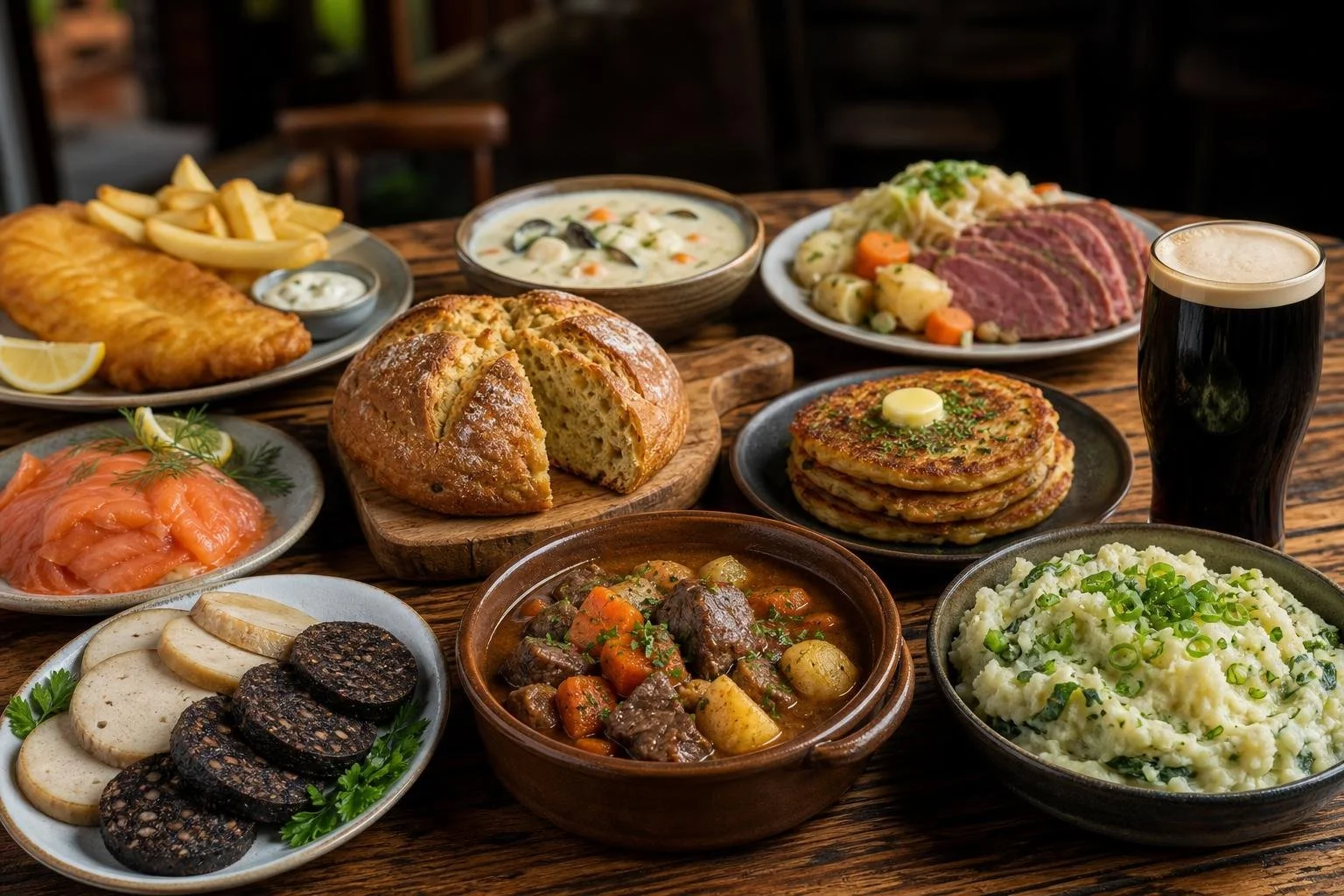
If you're planning to visit Ireland or just want to try your hand at classic Irish cooking, traditional Irish dishes will bring you that cozy, comforting feeling that’s kept Irish families going for generations.
From potato-based staples to old-school stews and baked treats, these foods reflect Ireland’s agricultural roots and its fondness for simple, satisfying meals.
1) Irish stew (lamb or mutton)
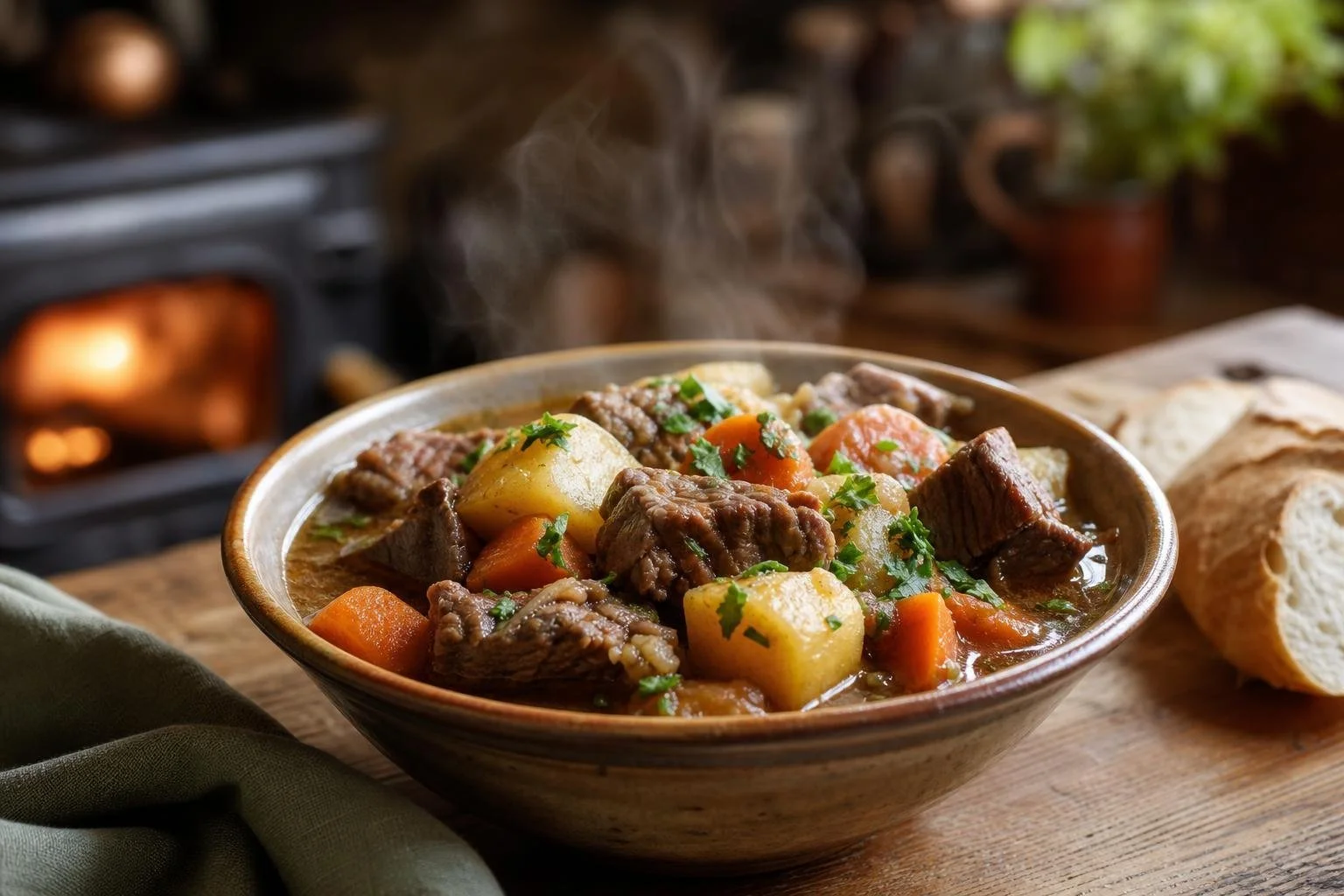
Irish stew stands out as Ireland's national dish and really captures the heart of traditional Irish cooking. You’ll spot this beloved comfort food on menus all across the country.
The dish is pretty straightforward—just a handful of core ingredients. Classic recipes use lamb or mutton, potatoes, and onions.
These basics were a necessity, keeping the stew affordable and filling for Irish families over the ages. Irish cooks usually prefer lamb shoulder over beef, but you’ll see the occasional beef version too.
They cube the meat and layer it with root vegetables like carrots and parsnips. Everything simmers in a rich stock until the lamb gets melt-in-your-mouth tender.
Most folks cook the stew in just one pot, so cleanup is a breeze. Some toss in pearl barley or a spoonful of roux if the broth needs thickening.
What you get is a hearty, warming meal that’s honestly hard to beat when it’s cold outside.
2) Full Irish breakfast
The full Irish breakfast is probably one of the most iconic Irish meals. You’ll find this filling plate in hotels, B&Bs, and cafés everywhere.
A proper full Irish usually comes with rashers, sausages, eggs, black pudding, white pudding, baked beans, grilled tomatoes, and toast. Sometimes you’ll get mushrooms or hash browns too.
The protein-heavy lineup is meant to keep you fueled for hours. Black and white puddings are what make this breakfast stand out—black pudding’s got pork, blood, and oatmeal, while white pudding swaps the blood for pork, suet, and cereal.
Depending on where you are, you might see potato bread or soda bread instead of regular toast. Some places add fried potatoes or boxty for good measure.
Traditionally, you’d get a pot of strong tea with your breakfast, but coffee’s catching up. These days, the full Irish is more of a weekend or special occasion treat than an everyday thing.
3) Soda bread
Soda bread is one of those foods everyone in Ireland knows. You’ll spot this rustic loaf in kitchens and bakeries all over the country.
The bread gets its rise from baking soda instead of yeast. When you mix baking soda with buttermilk, you get a reaction that makes the bread puff up. This no-yeast method is quick and easy—no waiting around for dough to rise.
Irish soda bread popped up in the early- to mid-1800s when bicarbonate of soda became available. The old-school recipe used just flour, buttermilk, salt, and baking soda. Simple, but it worked.
Most loaves have a cross scored on top, which is kind of the signature look for Irish soda bread. The bread’s texture is dense, with a bit of tang from the buttermilk, and the crust is nicely crunchy.
People love it fresh from the oven with butter, or as a side for stews and soups. Honestly, it’s hard to beat when it’s still warm.
4) Boxty (Irish potato pancake)
Boxty is a classic Irish potato pancake that combines grated raw potatoes and mashed potatoes for a texture you won’t find anywhere else. You’ll mostly run into boxty in Ireland’s north midlands and southern Ulster—places like Leitrim, Mayo, and Cavan.
These pancakes fry up with a crispy, golden outside and a soft, fluffy inside. What really makes boxty different is that mix of mashed and grated potatoes, plus a bit of buttermilk and flour.
This dish dates back to the Great Hunger, so it’s got some serious history. You can eat boxty for breakfast, lunch, or dinner—it’s super versatile and goes with all sorts of toppings.
Making boxty at home is pretty straightforward. You just need potatoes, flour, and buttermilk to whip up these pancakes. While Americans mostly eat boxty on St Patrick’s Day, in Ireland it shows up on the table all year round.
5) Coddle (Dublin stew)
Dublin coddle is a classic comfort food that turns basic ingredients into something special. You’ll find layers of pork sausages, bacon rashers, potatoes, and onions all simmered together in one pot.
This dish goes back to the 1700s and really took off in Dublin’s working-class kitchens. Families liked it because they could leave it bubbling away while they got on with their day.
Coddle helped use up leftovers, so it was practical and thrifty. The name comes from the gentle simmering, letting everything “coddle” together until it’s tender.
Coddle looks a bit different from Irish stew—it’s pale and has a milder flavor. You’ll usually find chunky potatoes, sliced onions, salt, pepper, and a few herbs in a seasoned broth.
This meal is especially popular in Dublin during the colder months. You can still find it in pubs and homes across the city, keeping the tradition alive.
6) Black pudding
Black pudding is a type of blood sausage that comes from the UK and Ireland. It’s made from pork or beef blood, mixed with pork fat or beef suet and cereal like oatmeal or barley groats.
You’ll spot black pudding as an essential part of a traditional Irish breakfast. It’s usually right there with sausages, rashers, eggs, beans, mushrooms, tomatoes, and toast—especially in an Ulster Fry or full Irish breakfast.
Clonakilty Food Company is probably Ireland’s most famous black pudding maker. Lots of people consider them the gold standard for black pudding, but you’ll also find regional versions like Kelly’s ‘putóg’ black pudding in Newport, County Mayo, which uses sheep’s stomach as the casing.
Black pudding means more to Ireland than just breakfast food—it pops up at festivals and food events, serving as a symbol of Irish culinary identity.
7) White pudding
White pudding is another breakfast classic you’ll see all over Ireland. It’s similar to black pudding, but there’s no blood involved.
Most white pudding recipes call for oatmeal or breadcrumbs mixed with pork fat and suet, plus a few spices for a savory kick. The mixture gets packed into a sausage casing and cooked.
This breakfast staple is usually sliced and pan-fried until the outside turns crispy. You’ll often get it with eggs, rashers, beans, and toast as part of a full Irish breakfast.
The texture is what sets white pudding apart—the oatmeal or breadcrumbs make it crumbly, which goes nicely with the other breakfast items.
White pudding has a long history in Irish kitchens, and while the recipes have changed a bit over the years, the basic idea hasn’t. Both Ireland and Scotland lay claim to this traditional breakfast favorite.
You can fry, grill, or even microwave white pudding. It’s a solid way to start the day with some extra protein and energy.
8) Seafood chowder
Irish seafood chowder is one of the country's most beloved dishes. This thick, creamy soup brings together fresh fish and shellfish in a rich broth that really shows off Ireland's coastal heritage.
You’ll usually find this comfort food loaded with smoked haddock, salmon, mussels, and Dublin Bay prawns. The creamy base gets packed with hearty vegetables, so every bowl feels extra warming and satisfying.
Seafood chowder is especially popular in seaside towns like Kinsale. Local restaurants often serve it as a speciality, usually with dense brown soda bread and a slab of Irish butter for dipping.
The dish captures Ireland's long relationship with the sea. For centuries, coastal communities have turned to the Atlantic and nearby waters for their seafood bounty.
This maritime tradition shines in every spoonful of chowder. Whether you’re slurping it at a pub along the Wild Atlantic Way or tucked away in Dublin city centre, seafood chowder delivers a genuine taste of Irish coastal cooking.
9) Barmbrack (Fruit Bread)
Barmbrack is a sweetened bread full of dried and candied fruits that pops up in bakeries and homes all over Ireland. The name comes from the Irish "bairín breac," meaning speckled loaf—a nod to its fruit-flecked look.
This traditional bread is famous for its Halloween connection, rooted in the ancient Celtic festival of Samhain. People typically use sultanas, raisins, and currants soaked overnight in strong black tea, and some folks sneak in a bit of whisky for good measure.
At Halloween, bakers slip little items like rings into the loaf. If you get the slice with the ring, well, you’re supposed to have good luck for the coming year.
Many versions use yeast, but you can also make barmbrack without yeast if you want to keep things simple. The bread is gently spiced with cinnamon and cloves, which makes for a tender loaf that’s perfect with a cup of tea. Even though it’s most famous at Halloween, you’ll see barmbrack on Irish tables year-round.
10) Colcannon (mashed potatoes with cabbage or kale)
Colcannon is one of Ireland's signature comfort dishes, blending creamy mashed potatoes with greens. The name comes from the Irish "cál ceannann," meaning white-headed cabbage.
People make colcannon with either kale or cabbage mixed into fluffy potatoes. Spring onions, butter, and milk or cream get tossed in for rich flavour.
It’s a dish that caught on because it’s cheap and filling, using ingredients that thrive in Ireland. Making colcannon is pretty straightforward.
Boil the potatoes until they’re soft, then mash them up with butter and milk. Cook your greens and spring onions separately, then mix everything together while it’s still warm.
Usually, people serve it with a knob of butter melting on top. You might have it next to sausages, stews, or any hearty main. It’s real comfort food—simple, honest, and somehow always hits the spot.
Cultural Significance of Irish Cuisine
Irish food is a product of centuries of history, shaped by both foreign influences and deep local traditions. It plays a central role in how families come together and celebrate big occasions throughout the year.
Historical Influences
Irish cuisine has evolved over centuries of social and political change. The potato showed up in Ireland during the 16th century and quickly changed the country's food culture. This one ingredient became more than just a staple for Irish families.
Potatoes came to represent survival and resilience in Irish identity. After the Great Famine of the 1840s, this humble vegetable symbolized the nation's strength. You’ll spot potatoes in nearly every traditional dish, from colcannon to champ.
British and European cultures also left their mark on Irish cooking. Being so close to Britain meant new cooking methods and ingredients filtered in over time. Still, Irish cooking leans on fresh local ingredients instead of the heavy herbs and spices you see elsewhere.
Role in Irish Celebrations
Traditional Irish dishes have a way of bringing families together for holidays and special events. Irish stew often shows up at winter gatherings, offering warmth and comfort when it’s cold outside.
The full Irish breakfast marks important mornings and weekend family meals. Religious celebrations come with their own foods too—colcannon for Halloween, boxty and bacon for Easter Sunday.
Christmas dinners highlight the best of Irish cooking, with roasted meats and seasonal vegetables. At weddings and community festivals, folks celebrate Ireland’s rich culinary heritage by sharing meals.
Cooking and sharing these traditional recipes passes down cultural knowledge from one generation to the next. It’s not just about the food; it’s about making memories and keeping traditions alive.
Common Ingredients in Traditional Dishes
Irish cooking leans heavily on fresh, high-quality ingredients from local farms and waters. The flavours in these dishes really come from the produce itself, rather than a big mix of spices and herbs.
Locally Sourced Produce
Potatoes are the backbone of Irish cuisine. They were introduced in the 1600s and quickly became essential for Irish families. You’ll find them in colcannon, boxty, champ, and honestly, just about everywhere.
Meat is a big deal too. Lamb and beef from Ireland’s green pastures show up in stews and roasts. Pork makes appearances in rashers, sausages, and black pudding.
Seafood is a staple along the coast—salmon, cod, mussels, and oysters all have their place in traditional recipes. Root veggies like carrots, turnips, and parsnips add heft to stews and sides.
Cabbage often tags along with potatoes. Dairy, especially butter and milk, is everywhere in Irish cooking, thanks to the country’s strong dairy tradition.
Typical Seasonings and Flavours
Irish dishes don’t really go heavy on herbs and spices like some other cuisines. The flavour comes from how you cook things and the freshness of the ingredients.
Salt and black pepper are the basics for most dishes. Parsley pops up now and then, usually as a garnish or in sauces.
Onions and garlic add depth to stews and meat dishes. Irish cooking generally lets the ingredients do the talking, rather than covering them up with strong spices.
Butter is the secret weapon in so many recipes, adding a rich, creamy note. That simplicity lets the quality of the meat, potatoes, and veggies shine through in every bite.
Frequently Asked Questions
Irish cuisine centers on hearty ingredients like potatoes, meat, and bread. Dishes run the gamut from warming stews to crispy potato pancakes. Traditional meals often feature lamb, pork, and local vegetables cooked up in ways that are simple but oh-so-satisfying.
What are the most traditional dishes served in Ireland?
Classic Irish dishes include Irish stew (made with lamb or mutton), colcannon (mashed potatoes with cabbage), and champ (mashed potatoes with spring onions). These meals stick to basic ingredients that Irish families have relied on for generations.
Soda bread shows up at nearly every table. In Dublin, coddle—sausages, bacon, potatoes, and onions in a stew—is a local favourite.
Boxty is another big staple. These potato pancakes can be fried, baked, or boiled, depending on where you are.
Which food is most commonly eaten in Ireland?
Potatoes still reign as the most commonly eaten food in Ireland. They became a staple after arriving in the 1600s and now show up in countless dishes.
You’ll see potatoes as chips, mashed, roasted, or worked into recipes like boxty and colcannon. Most families serve them alongside meat and veggies at daily meals.
Bread—especially soda bread—also plays a starring role. Most households eat it with butter at breakfast or next to soups and stews.
What are the best-known Irish main courses to try?
Irish stew is probably the country’s most well-known main course. Traditionally, it uses lamb or mutton with potatoes, onions, and carrots simmered until everything’s tender.
The full Irish breakfast is another icon. It’s a feast of bacon, sausages, eggs, black pudding, white pudding, beans, tomatoes, and mushrooms, usually with toast or soda bread.
Coddle is a hearty Dublin specialty. Bacon and cabbage, corned beef with cabbage, and shepherd’s pie are also famous mains worth a try.
Which Irish dishes are typically found on a pub menu?
Irish pubs usually serve fish and chips, beef and Guinness stew, and shepherd’s pie. These meals really hit the spot with a pint in hand.
You’ll spot boxty on plenty of pub menus too. Coastal pubs often offer seafood chowder, loaded with fresh fish, mussels, and cream.
Bangers and mash (sausages with mashed potatoes) and toasties (grilled sandwiches) are pub favourites. Lots of places do a pared-back version of the full Irish breakfast all day long.
What are the most popular traditional Irish desserts?
Barmbrack stands out as one of Ireland’s favourite desserts. This fruit bread has raisins and sultanas soaked in tea, and it’s usually served sliced with butter.
Apple tart is another go-to on Irish dessert menus. It’s made with stewed apples, sugar, and shortcrust pastry, often served warm with cream or custard.
Bread and butter pudding uses leftover bread baked with eggs, milk, and dried fruit. Porter cake (made with stout) and carrageen moss pudding (a seaweed-based treat) are other traditional Irish sweets you might come across.
How has modern Irish cuisine evolved from traditional cooking?
Modern Irish chefs really lean into locally sourced, seasonal ingredients these days. They're updating classic recipes with a fresh perspective, which is honestly pretty exciting to see.
Some have taken humble peasant dishes and turned them into refined restaurant plates. You might not even recognize your granny's stew when you see it on a trendy menu.
Contemporary Irish restaurants focus on seafood, artisan cheeses, and organic vegetables. Chefs love to play with traditional flavours, throwing in international techniques or surprising presentations.
The farm-to-table movement's got strong roots in Ireland now. Young cooks try to balance innovation with a genuine respect for heritage recipes, so things like Irish stew and soda bread still matter—even as new culinary directions pop up.
