The Honest Guide to Ruin Bars in Budapest: 2026
Budapest doesn't really have a nightlife district so much as a nervous system, and District VII is where most of the electricity runs. You'll hear it before you see it: bass leaking out of a stairwell, glasses clinking against a plastic garden table, someone's Bluetooth speaker losing an argument with the DJ inside. This is Erzsébetváros, the old Jewish Quarter, where bombed-out courtyards and abandoned factory buildings became the ruin bars that gave Budapest nightlife its reputation.
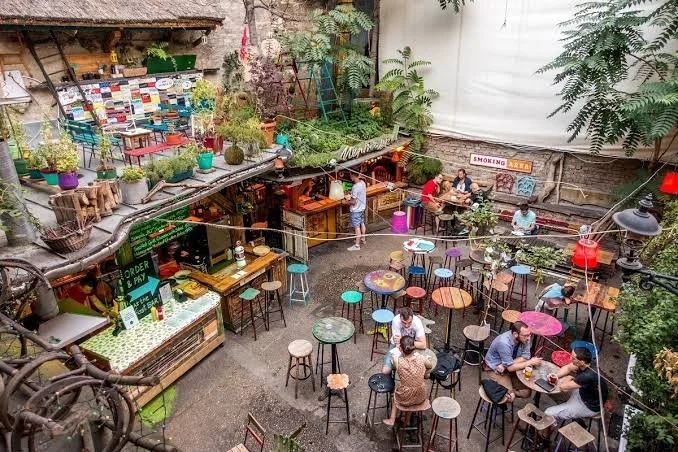
A ruin bar, or romkocsma, is a bar built inside a derelict building or courtyard, usually furnished with mismatched flea-market chairs, hung with fairy lights and old bicycles, and left to feel unfinished on purpose. Some are sprawling all-night complexes. Others are the kind of quiet, ivy-choked courtyard where you could sit for three hours over two beers and not notice the time passing.
The honest version of this guide treats the evening as something you build gradually, not a checklist you race through. Ride the volume: start low, in conversation and courtyard shade, then let the night gain momentum toward dancing, a rooftop view, or the Danube, depending on what you're actually in the mood for that night. Some of the bars everyone recommends are still worth it. A few have changed hands, calmed down, or turned into something closer to a restaurant with better lighting. This is where to go, in what order, and what to skip when it isn't your kind of night.
The Best Ruin Bars in Budapest by Mood
Budapest ruin bars aren't interchangeable, whatever the "top 10" lists suggest. Szimpla Kert is the famous all-day original, Instant-Fogas is the dance-until-dawn complex, Mazel Tov leans into dinner and cocktails, and Kőleves Kert, Élesztőház, Doboz, Telep, and Csendes Vintage Bar each cover a different register of the night, from a slow summer drink to a proper craft-beer session. Most of this happens within a ten-minute walk of Kazinczy Utca, Akácfa Utca, Klauzál Tér, Dob Utca, and Király Utca.
Szimpla Kert for the Original, All-Day Experience
Szimpla Kert opened in 2002 and effectively invented the genre, according to Nomadic Matt's account of the ruin bar scene. It sprawls across a courtyard and several floors of a former factory building, stitched together with reclaimed furniture, a rusted Trabant car turned into seating, and enough plants to make it feel half-jungle.
It runs from morning coffee through to a genuinely late finish, and on Sundays a farmers' market takes over parts of the courtyard, selling produce and langos rather than cocktails. That's the best time to see it without the crush.
Instant-Fogas for Dancing Until Dawn
Instant merged with the neighbouring Fogas Ház years back to form the Instant-Fogas Complex, one connected maze of rooms, dance floors, and a small pool table area that somehow always has a queue. Expect multiple DJ booths playing different genres on different floors, so you can walk from techno into house into something closer to chart pop within thirty seconds.
This is the venue for people who came to dance, not to talk. If your night's endpoint is 4am and moving your feet, start building toward Instant-Fogas rather than starting there.
Mazel Tov for Dinner and Cocktails
Mazel Tov sits closer to a restaurant-bar than a raw ruin bar these days, with a glass-roofed courtyard, Middle Eastern-leaning food, and a cocktail list that takes itself seriously. It's the right call when you want a proper dinner with atmosphere before the night gets looser elsewhere.
Go in expecting polish, not grit. It's a good decompression point between afternoon sightseeing and a rowdier bar later.
Kőleves Kert for a Slower Summer Drink
Kőleves Kert is a garden bar built around a courtyard with big communal tables, string lights, and a noticeably calmer crowd than Szimpla a few streets over. In summer it's one of the better spots for a slow beer and actual conversation before the volume rises elsewhere.
Élesztőház for Hungarian Craft Beer
Élesztőház (the name translates roughly to "yeast house") is built around Hungarian craft beer, with a rotating tap list from small domestic breweries alongside the usual Dreher and Soproni lagers. If you want to taste what Hungarian brewing looks like beyond the mass-market names, this is the stop.
Doboz, Telep, and Csendes Vintage Bar for Different Kinds of Night
Doboz leans industrial and a little grittier, with graffiti-covered walls and a younger, louder crowd most nights. Telep pulls in a more local, artsy audience with regular live music and DJ sets that skip the tourist-heavy playlists. Csendes Vintage Bar (the sibling of the original Csendes) trades ruin-bar chaos for candlelit, mismatched-furniture charm and a quieter, more romantic register, good for a first stop rather than a last one.
How to Ride the Volume Through a Ruin-Bar Night
The best ruin-bar nights build in stages: courtyard conversation first, then food and craft beer, then a decision about whether you want dancing, a rooftop, or the river to finish. Trying to hit every famous name on one night usually means arriving at each one too rushed to actually enjoy it.
When Should You Start Your Night?
Start around 7 or 8pm if you want a seat and a conversation you can actually hear. Ruin bars fill fast after 10pm, especially on weekends, and by midnight the courtyards at Szimpla and Instant-Fogas are standing-room only. An earlier start also means catching the last of the daylight in a courtyard, which changes the mood entirely, peeling plaster and ivy look very different lit by evening sun versus string lights alone.
A Route From Courtyard Drinks to a Club Finish
A workable route: begin at Kőleves Kert or Csendes Vintage Bar for a calm first drink, move to Mazel Tov or Élesztőház for food and better beer, then finish at Szimpla Kert or Instant-Fogas once the energy's ready for it. This mirrors the general shape recommended in this District VII ruin bar route guide, which treats the crawl as a build rather than a straight line. The whole loop sits within walking distance, though the 4/6 tram along the Grand Boulevard is a fast link if your feet give out, and Deák Tér connects you back to the metro for a night bus home.
When a Budapest Ruin Bar Pub Crawl Is Worth It
An organised pub crawl earns its price for solo travellers or small groups who want guaranteed entry, a guide who knows the current room-by-room layout, and company without the effort of arranging it. For couples or confident groups of four or more, walking the route yourself costs less and lets you skip venues that aren't landing that night. If you do want a structured option, this pub crawl planning guide breaks down what a typical route and price point looks like.
How to See Szimpla Kert Without the Saturday Crush
Visit Szimpla Kert before 9pm on a weekday, or on Sunday morning during the farmers' market, when the courtyard is half-full and you can actually see the décor instead of the backs of people's heads. Saturday night after 11pm turns it into something closer to a queue with a bar attached.
What to Drink and Eat Between Stops
Ruin bars run on cheap lager, small-batch Hungarian beer, pálinka shots, and langos, with cocktails and wine available at the more polished stops. A 0.5 litre Dreher or Soproni typically costs 950 to 1,400 forints (roughly $2.60 to $3.80) in most ruin bars, according to this rundown of Budapest nightlife pricing.
Hungarian Beer, Craft Beer, and What to Order
Dreher and Soproni are the default lagers on tap almost everywhere, light, easy-drinking, and cheap enough to not think twice about a second round. For something more interesting, Élesztőház and a handful of other bars pour rotating taps from small Hungarian craft breweries, worth asking your server about since the list changes often.
Pálinka, Cocktails, and Keeping the Pace
Pálinka is Hungary's fruit brandy, usually apricot or plum, served cold in small glasses and hitting somewhere around 40 to 50% ABV. Treat it as a toast, not a session drink. Cocktails are strongest at Mazel Tov and the more restaurant-leaning bars; ruin bars proper tend to do them competently rather than brilliantly, so save the serious cocktail order for a dedicated cocktail bar later in the night.
Hungarian Wines Worth Asking For
Hungary's wine list runs deeper than most visitors expect. Furmint (dry, mineral, often from the Tokaj region) and Kékfrankos (a peppery red) both show up on decent bar menus, and a glass of Tokaji, Hungary's famous sweet dessert wine, is worth ordering once even if you don't usually drink dessert wine.
Late-Night Food That Makes Sense
Langos, deep-fried dough topped with sour cream and cheese, is the street food that soaks up a night of drinking better than anything else on offer. Street food stalls cluster near Klauzál Tér and along the routes between the bigger bars, and most ruin bars now run their own kitchen or food truck inside the courtyard.
Where to Go After the Ruin Bars
The ruin bars are a starting point, not the whole night. Once the courtyards start feeling too crowded or too samey, Budapest offers rooftop bars with skyline views, Danube party cruises, late clubs, and thermal bath parties as clear next moves.
Clubs and Late Bars Beyond Instant-Fogas
Ötkert sits closer to District V and blends a ruin-bar look with a proper club schedule, DJ sets running later than most District VII venues manage. Morrison's 2 is the reliable, if unglamorous, option for a big student-heavy dance floor open into the early hours. For something calmer, Budapest Jazz Club and Divino Wine Bar swap dancing for live sets and a serious wine list, good picks if the night has tipped from party toward wind-down.
Rooftop Drinks With a Budapest View
360 Bar and Leo Rooftop both look out over Terézváros and District VI rooftops toward the Basilica, and Black Swan adds a similarly elevated view with a more cocktail-forward menu. Go around sunset if you want the skyline gold-lit behind St. Stephen's Basilica and the Parliament dome in the distance; go later for the city lit up and the crowd louder.
Danube Party Cruises and Riverside Nights
A Danube party cruise turns Chain Bridge, the Parliament building, and the Buda Castle hill into a moving backdrop, usually departing from pontoons around Vigadó Tér or Vörösmarty Tér. These trips run a few hours, with music and a bar onboard, and work best as a mid-evening interlude rather than the final stop, since you're back on land by the time the real late-night energy kicks in elsewhere.
Thermal Bath Parties and Live-Music Alternatives
Széchenyi Baths hosts Sparty nights, thermal bath parties with DJs, lighting rigs, and a crowd drinking cocktails waist-deep in warm water, a genuinely strange and memorable way to end a Budapest night out. It's a different kind of stamina test to a ruin-bar crawl, so treat it as an alternative finish rather than an add-on to an already long night.
Prices, Safety, and Getting Home Without the Rookie Mistakes
A realistic ruin-bar night in Budapest costs relatively little for the experience on offer, with beer around 950 to 1,400 forints ($2.60 to $3.80) a round, according to this nightlife cost breakdown. The bigger risk to your wallet isn't the ruin bars themselves; it's the touts and mispriced menus that operate around the edges of the district.
How Much Does a Ruin-Bar Night Cost?
Budget roughly $3 to $5 per beer, $6 to $10 for a cocktail at the nicer bars, and a few dollars for langos or street food along the way. A night of five or six drinks and food between two or three venues comes in well under what the same night would cost in most Western European capitals.
How to Avoid Bar Scams and Street Touts
Walk away from anyone on the street inviting you into an unmarked bar, especially near Váci Utca, where the classic "friendly girl" scam involves being led to a bar with no visible prices and handed a bill running into hundreds of dollars, a pattern flagged clearly in this Budapest nightlife safety guide. Stick to bars with visible menus and prices posted, and always check a bill before paying.
What to Wear and When to Book Ahead
Ruin bars run casual, jeans and a t-shirt are fine everywhere in District VII. Rooftop bars and Danube cruises lean smarter, so pack one slightly dressier outfit if those are on your list. Book cruise tickets and any table at a rooftop bar a day ahead in peak summer months, when both sell out.
Using Bolt and Night Transport After Last Orders
Bolt is the easiest way home once the metro stops running near midnight; it's cheaper and more predictable than flagging a street taxi, and the app shows your fare before you book. Trams 4 and 6 along the Grand Boulevard and the night bus network both keep running through the small hours if you'd rather not wait for a car.
Let the Night Build, Not Blur
Budapest nightlife rewards patience more than ambition. The ruin bars work best as a slow build, courtyard conversation, food and craft beer, then a decision about dancing, a rooftop, or the river, rather than a rushed tour of every name on a list.
Some of Budapest's ruin bars have changed since the first wave of write-ups: a few have quieted down, others have leaned into restaurant service over raw atmosphere. Pick two or three stops that match the mood you actually want tonight, leave room to change plan halfway through, and let the volume rise on its own schedule.
