How to Pour the Perfect Guinness: The Beckett’s Pub Ritual
Pouring a pint of Guinness is more than just pulling a tap handle or cracking open a can. The iconic Irish stout requires a specific technique to achieve its signature cascading effect, creamy head, and balanced taste. Whether you're behind the bar or enjoying one at home, the method you use directly impacts the drinking experience.
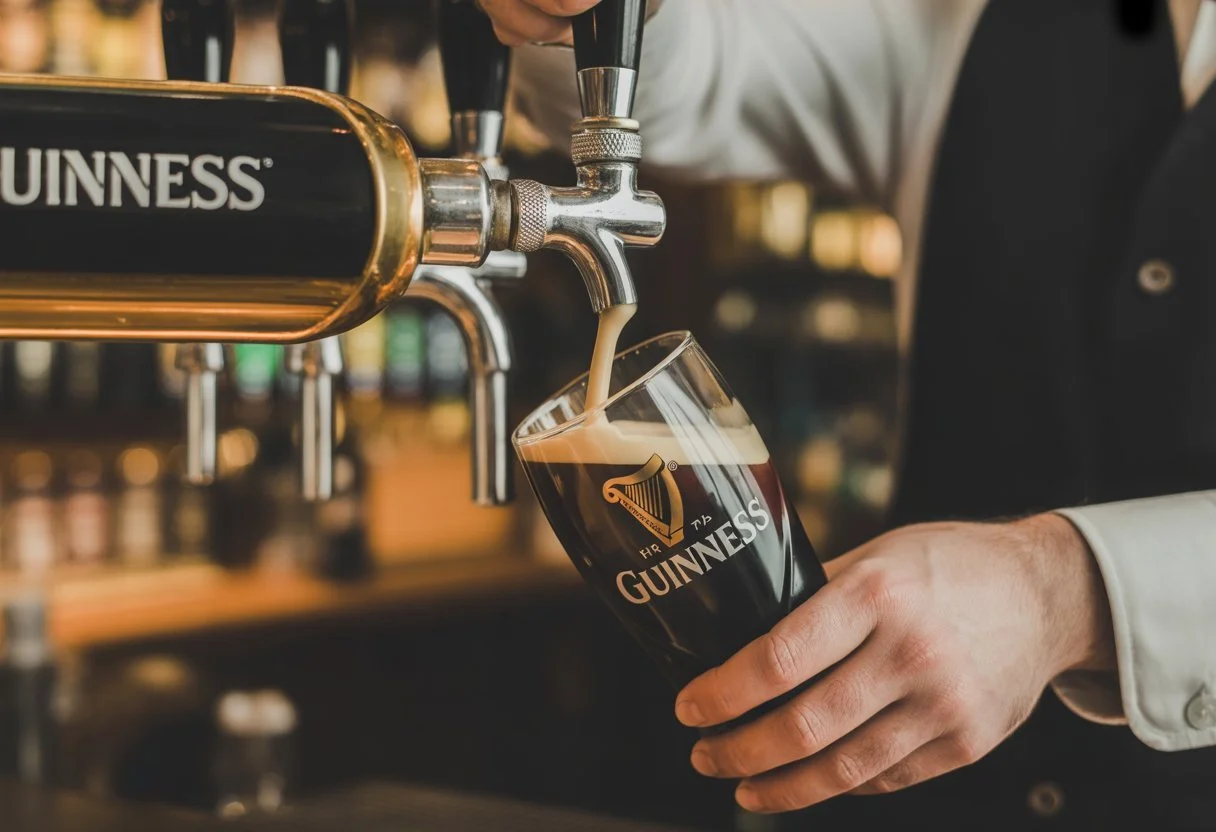
The perfect Guinness pour involves holding the glass at a 45-degree angle, filling to three-quarters full, allowing the beer to settle for roughly 90 seconds, then topping up to create a head between 12-18mm high. This two-part process allows the nitrogen and carbon dioxide blend to settle properly, creating the smooth texture and appearance that Guinness drinkers expect.
Getting it right matters because 95% of drinkers judge beer quality by appearance alone, and a poorly poured pint can ruin the experience. From selecting clean glassware to maintaining proper temperature and pressure settings, each element plays a role in delivering that perfect pint.
Key Takeaways
The two-part pour technique with a 90-second settle creates the proper head and cascading effect
Temperature, pressure, and clean glassware are essential for both draught systems and home pours
The final head should measure between 12-18mm and the beer must be served cold for optimal taste
Why the Perfect Guinness Pour Matters
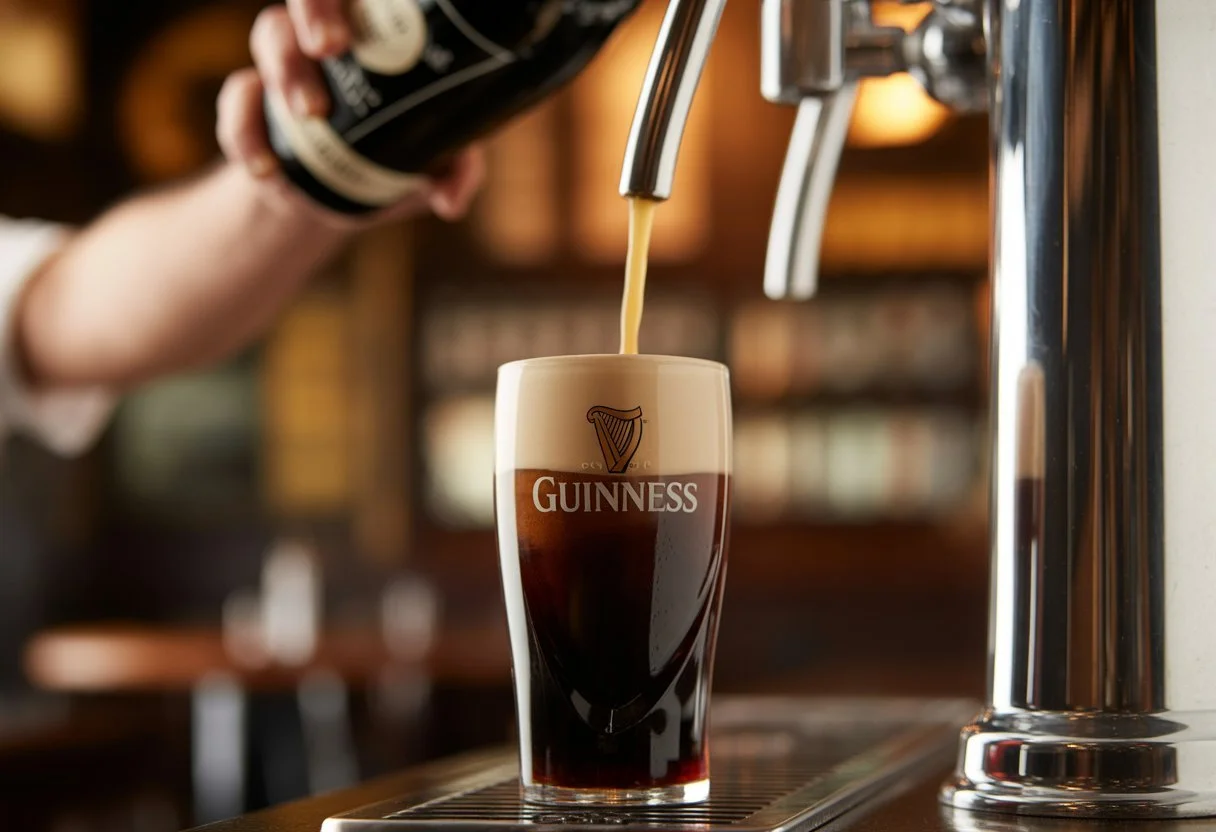
The way you pour Guinness directly affects its taste, appearance, and overall drinking experience. A proper pour ensures the beer's unique nitrogen-based carbonation creates the signature creamy head and smooth texture that distinguishes Guinness Draught from other beers.
Taste, Aroma, and Texture
The perfect Guinness pour creates ideal head formation that releases the beer's complex aromas whilst maintaining the right balance of gases. When you pour at a 45-degree angle and allow the beer to settle, you're giving the nitrogen time to work properly.
The settling process lets nitrogen bubbles cascade downwards whilst creating a dense, creamy head. This head should measure between 12-18 mm, which traps volatile compounds and delivers them to your nose as you drink.
Temperature plays a critical role in taste. Beer that's too warm foams due to overexcited CO2, whilst beer that's too cold prevents proper head formation. The optimal serving temperature is 38 degrees Fahrenheit (3-8 degrees Celsius), which keeps the gas inside the beer at its proper balance.
A rushed pour or incorrect angle disrupts this delicate process. You'll end up with either excessive foam or a flat pint that lacks the silky mouthfeel Guinness is known for.
Visual Presentation of Guinness
The visual appeal of a perfectly poured pint reassures you about the quality of the venue and the care taken with the beer. You should see a clear distinction between the dark ruby-black body and the pale cream head sitting just proud of the rim.
During the 90-second settling period, you'll witness the mesmerising cascade effect as bubbles flow downwards. The entire pint should reach a consistent colour throughout before topping up.
Key visual indicators of a perfect pour:
Sharp cream line where head meets liquid
Head height of 12-18 mm
Domed head sitting above the rim
No large bubbles breaking through the head
Glass filled to just below the Guinness harp logo before settling
Tradition and Ritual
The two-part pour is a reliable and repeatable method that transforms serving beer into a deliberate ritual. You're not simply dispensing liquid; you're participating in a process that demands patience and attention.
The waiting period between pours gives you time to engage with customers. This built-in pause creates anticipation and signals that the drink is worth waiting for.
Irish pubs have perfected this technique over decades. They understand that rushing the pour shows disrespect for the product and the drinker.
Guinness Heritage and Culture
Guinness isn't just any stout – it's a world-famous beer steeped in heritage where proper pouring unlocks its full character. The brewing tradition dates back to 1759, but the draught version you know today first appeared in British pubs in the late 1950s.
The distinctive pouring method emerged from the beer's unique nitrogenation process. Learning to pour properly means you're upholding standards developed through years of brewing expertise and refinement.
When you master the pour, you're connecting with generations of publicans and bartenders who've served Guinness. You're also demonstrating respect for the craftsmanship that goes into every keg, from the brewery in Dublin to your tap.
Preparing for the Pour: Glassware, Temperature, and Cleanliness
Before you pull that tap handle, three critical factors determine whether your Guinness will be exceptional or disappointing: the glass you choose, how clean your equipment is, and the temperature at which you serve it. Each element plays a distinct role in achieving the proper head formation, taste, and visual presentation.
Selecting the Right Glassware
You need a cool, branded Guinness Gravity Glass for the authentic pour. The branded Gravity Glass features specific design elements, including the gold harp on the front that serves as your fill marker during the initial pour.
The glass must be dry before you begin. Never use frozen or chilled glassware, as ice crystals create nucleation points that cause excessive foaming and waste beer. Room temperature glasses that have been properly air-dried work best for Guinness Draught.
Keep your beer glasses separate from other drinkware during washing. Food residue or dairy from coffee cups can contaminate the glass and affect head retention.
Ensuring Clean Glassware and Equipment
Clean glassware is essential to your beer's appearance, aroma, and flavour. Wash your Guinness glasses in a separate dishwasher from food service items to prevent contamination from food waste or dairy residue.
After washing, place glasses on racks that allow air circulation inside for proper drying. If you use a sanitiser, let it dry completely before pouring.
A clean draught system affects every component from couplers to taps. Lines should be cleaned every two weeks using precise methods, typically by trained professionals. Any unclean component disrupts the pour and compromises taste.
Serving Temperature and Storage
Guinness Draught must be served cold at 38 degrees Fahrenheit (3-8 degrees Celsius). Beer that is too warm will foam due to overexcited CO2, whilst beer that is too cold prevents ideal head formation and retention.
Temperature consistency slows the ageing process and maintains the proper gas balance inside the beer. Kegs require 24 hours to acclimate to cold room temperature, so plan ahead when receiving new stock at room temperature.
Your draught system requires balanced gas pressure set between 30-38 PSI for Guinness Draught. Incorrect pressure affects both the pour quality and carbonation levels.
How to Pour the Perfect Guinness from the Tap
Pouring a perfect Guinness from the tap requires patience and proper technique to achieve the iconic creamy head and smooth taste. The process centres on a deliberate two-part pour that allows nitrogen bubbles to settle correctly between stages.
The Two-Part Pour Method Explained
The two-part pour distinguishes Guinness from other beers and forms the foundation of achieving a perfect pour. This method involves filling the glass approximately three-quarters full, pausing to let the beer settle, then topping it up to complete the pint.
The technique exists because of Guinness's unique nitrogen-based carbonation system. Unlike carbon dioxide alone, the nitrogen creates smaller bubbles that cascade downward through the beer, requiring time to settle properly. Rushing through a single continuous pour results in an improperly formed head and compromises the beer's presentation.
The settling period lasts approximately 119.5 seconds, though some bartenders adjust this slightly based on conditions. During this pause, you'll observe the distinctive surge and settle effect as the nitrogen bubbles cascade through the dark stout. This visual spectacle isn't merely theatrical—it's essential for proper texture and flavour development.
Tilting the Glass and First Pour
Start with a cool, clean, dry Guinness-branded glass held at a 45-degree angle beneath the tap. The angle prevents excessive foam formation and allows the beer to flow smoothly down the side of the glass.
Pull the tap handle forward until it's completely horizontal to ensure full flow. Fill the glass to approximately 15mm to 20mm from the top, which equates to roughly three-quarters full. Never allow the tap spout to touch the beer during pouring, as this can affect cleanliness and carbonation.
Maintain the 45-degree tilt throughout this first pour. As the glass fills, you'll notice the dark liquid pooling at the bottom whilst a creamy head begins to form at the top. The angle controls the rate at which nitrogen is released from the beer.
Letting It Settle: The Role of Nitrogen Bubbles
Once you've completed the first pour, place the glass on a flat surface and allow it to settle. The nitrogen bubbles create the characteristic cascading effect, appearing to flow downward whilst actually moving in complex circulation patterns throughout the glass.
These nitrogen bubbles are significantly smaller than carbon dioxide bubbles found in lager. They create a smoother, creamier mouthfeel and contribute to Guinness's distinctive appearance. The settling process allows these bubbles to rise to the surface, forming the dense, creamy head whilst the body of the beer clarifies to its deep ruby-black colour.
You'll know the beer has settled properly when the surge subsides and a clear distinction appears between the dark body and pale head. Patience during this stage separates an acceptable pint from a perfect Guinness pour.
Topping Up for the Perfect Head
After the beer has settled, complete the pour by pushing the tap handle backwards to engage the secondary flow. This final stage requires a gentler touch than the initial pour.
Top up the glass slowly until the head rises just proud of the rim, creating a slight dome. The ideal head measures approximately 20mm in depth and should be thick enough that you cannot see through it. Stop pouring before any stout overflows down the side of the glass.
Never use a spatula or any implement to level the head, as this destroys the nitrogen structure you've carefully built. The finished pint should display a clear separation between the creamy white head and dark body. Present the glass with a steady hand to avoid spillage, ensuring the Guinness logo faces the customer.
Pouring Guinness from a Can at Home
The widget inside canned Guinness Draught releases nitrogen when opened, creating the signature creamy head and smooth texture that defines the perfect pour. Whether you prefer the traditional angled pour or the bold hard pour method, both techniques deliver quality results when executed properly.
Understanding the Widget and Nitrogenation
The widget revolutionised Guinness at home when it was introduced in 1988. This small plastic sphere sits inside each can and contains pressurised nitrogen gas. When you crack open the can, the widget releases nitrogen bubbles throughout the liquid, mimicking the draught system found in pubs.
Nitrogenation differs significantly from standard carbonation used in most beers. The smaller nitrogen bubbles create a smoother, creamier mouthfeel and produce the distinctive cascading effect as the beer settles. This process takes approximately 90 to 120 seconds to complete fully.
The widget works best when the can is stored at refrigerator temperature between 4°C and 8°C. Room temperature cans produce less dramatic results because the gas doesn't activate as effectively. Always check the can is cold before pouring for optimal performance.
Pouring Techniques for Canned Guinness
Start with a clean, cool pint glass held at a 45-degree angle. Open your can of Guinness Draught and pour steadily in one continuous motion until the glass is about three-quarters full. The beer should flow down the side of the tilted glass rather than dropping straight into the bottom.
Once poured, place the glass on a flat surface and allow it to settle. You'll notice the surge and settle effect as nitrogen bubbles cascade downward whilst darker liquid rises. This settling period typically takes 90 to 120 seconds.
The pour is complete when the surge has fully settled and you're left with a distinct separation between the dark body and creamy tan head. Your glass should show approximately 1.5 to 2 centimetres of head on top.
Hard Pour vs Traditional Pour
The traditional 45-degree angle method represents how to pour Guinness for decades. It's reliable, consistent, and produces excellent results with minimal practice. This technique works by gently introducing the liquid into the glass, allowing the nitrogen to activate gradually.
The hard pour method, also called "the flip," takes a different approach. You hold the glass upright and flip the opened can completely upside down into it. As the liquid pours out, you slowly lift the inverted can whilst the beer rises to meet it. This aggressive technique forces rapid nitrogenation.
Both methods achieve the signature creamy head and smooth taste. The traditional pour offers more control and predictability, whilst the hard pour creates a more dramatic visual effect. Your personal preference determines which technique suits you best, as pouring Guinness ultimately comes down to enjoying it your way.
Draught System Essentials for Bars and Pubs
A proper draught system requires precise temperature control, balanced gas pressure, and rigorous cleaning protocols to deliver consistent Guinness draught quality with every pour.
Maintaining a Clean Draught System
Your draught system requires regular cleaning every two weeks to prevent flavour contamination and ensure each pint tastes as intended. Any unclean component—including couplers, beer pumps, lines, or taps—will disrupt the perfect pour and compromise taste quality.
Treat your cold room and draught components as part of your food programme. Beer is a food product that demands the same hygiene standards as your kitchen equipment.
Professional cleaning services typically handle line maintenance, but you should understand the process to verify work is completed properly and on schedule. A clean draught system prevents residue build-up that creates off-flavours and affects the characteristic smoothness of Guinness draught.
Correct Gas Pressure and Its Impact
Regulators must be set between 30-38 PSI specifically for Guinness draught stout to maintain proper carbonation and enable the two-part pour technique. Pressure settings outside this range will cause pouring problems that affect both taste and presentation.
Too low pressure results in flat beer with inadequate head formation. Too high pressure creates excessive foaming and wastes product through overflow.
Your draught system only functions effectively when properly balanced, with gas pressure maintaining the keg's equilibrium throughout service. Contact your distributor or local quality team for pressure adjustments if you notice inconsistent pours or excessive foam. Temperature also affects gas balance—beer stored at 3-8°C keeps CO2 properly dissolved, whilst warm beer causes overexcited gas that foams uncontrollably.
Balancing Nitrogen and CO2
Nitrogenation creates the smooth, velvety texture that distinguishes Guinness draught from other beers. The gas blend in your system must combine nitrogen and CO2 in specific proportions to produce the signature cascade effect and creamy head.
Nitrogen bubbles are smaller than CO2 bubbles, creating the dense, creamy texture customers expect. This gas combination also enables the proper settling time during the two-part pour—approximately 90 seconds between initial fill and top-up.
Your system requires different gas blends for different beer styles, so never use the same setup for lagers and stouts. The nitrogen-rich blend essential for Guinness would create problems with other draught products on your bar.
Serving and Enjoying Your Perfect Guinness
The final moments of serving determine whether your carefully poured pint delivers the authentic Guinness experience. Proper presentation and understanding the ritual elements elevate the drink from mere beverage to cultural experience.
Final Presentation and Splitting the G
Serve the glass with the Guinness logo facing towards you, ensuring the branding is visible and properly aligned. This detail demonstrates attention to quality and completes the visual presentation.
The head should measure between 12-18 mm (one-half to three-quarters of an inch) and sit just proud of the rim. A properly formed head appears creamy white against the dark beer, creating the distinctive contrast Guinness is known for.
"Splitting the G" refers to the traditional practice where the liquid level divides the harp logo on the glass during the initial pour. This visual marker indicates you've filled the glass to the correct point before allowing it to settle. The technique ensures consistent pours and proper head formation.
Hold the glass by the base or lower half when presenting it, never by the rim. This maintains the temperature and prevents fingerprints on the upper portion where condensation creates the cascading effect during settling.
The perfect pint of Guinness should appear uniformly dark with a distinct separation between the beer and the creamy head when served.
Enhancing the Pub Experience in Budapest
Venues in cities like Birmingham, Liverpool, and Nottingham offer authentic Guinness experiences with both bartender-poured and self-serve options. These establishments understand the importance of proper storage, temperature control, and glassware maintenance.
Temperature plays a crucial role in enjoyment. Beer served at 38 degrees Fahrenheit (3-8 degrees Celsius) maintains the proper gas balance for ideal taste and head retention. Beer that's too warm foams excessively, whilst beer that's too cold prevents proper head formation.
Clean glassware makes a significant difference to appearance, aroma, and flavour. Never use frozen or chilled glasses, as ice crystals create nucleation points that cause excessive foaming. Air-dried glasses on proper racks prevent residue build-up that can affect the pour.
The ritual of waiting approximately 90-120 seconds for settling isn't merely tradition—it allows the nitrogen bubbles to cascade properly and the beer to achieve its characteristic smooth texture.
